Avg. blended CPM
$0.40
Observed in mature high-volume creator programs.Organic views tracked
1B+
Scale reached by creator programs run through viral.app.Creator payouts
$5M+
Processed across creator programs and creator payout workflows.Paid acquisition has a simple problem: Every good audience eventually gets expensive.
For consumer apps, TikTok CPMs can sit in the $8 to $18 range in competitive categories. Meta is often higher. Google App Campaigns add creative fatigue, weaker attribution signals, and a lot of automation that is hard to inspect. If your app needs a low cost per install and a sane LTV payback window, paid media can turn into a ceiling fast.
The way around that ceiling is not cheaper ads. It is reach that does not come from a CPM auction.
That is where high-volume UGC works. Instead of buying impressions directly, you build a network of small creators who post about the product and get paid on performance. The best videos earn their own distribution because people watch them, save them, and share them.
This guide breaks down the strategy, the unit economics, and the operating system needed to run it without rebuilding your marketing team around spreadsheets.
The problem
Auction-based paid media gets more expensive as more advertisers compete for the same inventory. That is not a temporary quirk. It is the structure of the channel.
For a D2C app, the problem is sharper because the economics are usually tight. You need enough volume to learn, enough creative testing to avoid fatigue, and a low enough CPI that the user can pay back inside a reasonable window.
Organic short-form video is different. A strong TikTok, Reel, or Short can travel far past the creator's follower count. A creator with 600 followers can still hit 400,000 views if the hook is right and the watch time holds.
That asymmetry is the opportunity.
The strategy
"The only way to escape the CPM auction is to produce content that earns distribution on its own. The platform serves it because viewers watch it, not because you paid for the placement."
 viral.appGrowth Perspective
The model is simple: recruit a lot of small creators and pay them for the views they generate. That only works cleanly when performance-based creator payments are tied to tracked content, payout windows, and approval rules.
Instead of paying one macro-influencer $15,000 for a single sponsored post, you recruit 200 creators with 500 to 15,000 followers. Each creator gets a performance deal, for example $1 per 1,000 views. No upfront fee. No guaranteed payment if the video flops. The money follows actual reach.
Small creators work because the content reads differently. When someone with 800 followers posts about an app they actually use, it feels closer to a peer recommendation than an ad. The algorithm also does not care much about follower count once a video starts performing. It cares about early engagement, watch time, rewatches, comments, and shares.
The volume matters. You are not betting on one video. You are building a portfolio.
If 200 creators each post 3 to 5 videos per month, a few videos will usually break out. Those outliers drive a large share of impressions. The long tail still creates baseline reach, product repetition, and creative learning.
Macro-influencers are useful when you need a recognizable name, cultural signal, and guaranteed reach. For performance UGC, that profile is often wrong.
Their CPM is fixed before the post goes live. Their audience expects sponsorships. One creator gives you one voice, one angle, and one shot at the feed.
Unknown creators give you the opposite: many voices, many hooks, many audience contexts, and a payout model where weak content barely costs anything.
The economics
Here is a realistic month-one model for 150 active creators. Each creator posts four videos, giving the campaign 600 videos in total.
The payout starts at $1 per 1,000 views. For each additional 1,000 views, the rate declines by $0.01 until it reaches a $0.50 floor at 50,000 views. After that, the rate stays at $0.50 per 1,000 views.
That structure does two useful things at once: it gives creators a simple starting rate, and it lets the brand's best videos become cheaper as they scale.
Even in month one, this structure gets the campaign under a $1 CPM before cohort optimization has done much work.
The declining rate matters most on outliers. As a video moves toward 50,000 views and beyond, its effective cost compresses toward the $0.50 floor. Smaller videos stay closer to the $1 starting rate, but they do not account for much spend because they do not generate many views.
The other lever is longevity. A paid TikTok ad stops when the budget stops. A good organic video can keep getting served for weeks or months. Its effective CPM keeps improving over time.
That last point changes the risk profile. In paid media, bad creative still spends. In performance-based UGC, a creator who posts a 200-view video earns $0.20. The downside is tiny, and the upside can be enormous.
Case study
Jenni AI is an AI writing assistant for students and academics. On paper, it is not an obvious viral product. It is a productivity tool with a specific use case, a considered purchase path, and an audience that spends a lot of time on desktop.
Still, Jenni AI became one of the clearest examples of what disciplined high-volume UGC can do.
The first useful insight was that Jenni AI had a specific creator base: students using the tool to write essays, research papers, and academic content.
Many of those students had fewer than 2,000 followers. Most were already posting study-related content around hashtags like #studytok and #studywithme. They were exactly the kind of creators another student might believe at midnight before a deadline.
Instead of paying larger edtech influencers for dedicated sponsored posts, the team recruited from that organic user base. The deal was simple: post your real experience using Jenni AI and earn $1 per 1,000 views.
The strongest formats were simple.
The first was a before-and-after: a student staring at a blank document, then using Jenni AI to build a structured outline. The value was visible in under 30 seconds.
The second was a study-with-me integration, where Jenni AI appeared as part of a broader work session. The tool was not the whole ad. It was part of the creator's routine.
Neither format needed a studio, heavy scripting, or professional production. A phone, a laptop, and a believable user story were enough.
This is where most creator programs break.
Fifty creators can be tracked in a spreadsheet for a while. Two hundred creators across TikTok, Instagram Reels, and YouTube Shorts cannot. Once you add view syncing, payout logic, invoices, multi-currency payments, and creator performance reviews, the manual system falls apart.
Jenni AI used viral.app as the operating layer: daily view syncs, payout calculations, invoices, creator reporting, and campaign analytics in one place.
"We are tracking close to 100k videos with viral.app. It's been super reliable and a big help in scaling our UGC program into one of the biggest in the world."
 Matthew GittlesonJenni AI Growth
Jenni AI passed one billion organic views across platforms. At a blended CPM under $1, the paid-media comparison gets absurd fast. One billion impressions at a $10 TikTok Ads CPM would cost $10 million.
The UGC program created the same order of reach for a fraction of that cost, while also building an organic content library that kept producing views after the posting window.
Set up viral.app campaigns, define payout rules, and onboard the first 50 student creators with a lightweight brief built around real product demos.
Use analytics to spot the videos outperforming the cohort. Before-and-after demos and natural study-session integrations emerge as the strongest patterns.
Expand the roster through referrals and similar creator profiles. Automated payouts and invoices keep the program manageable.
Evergreen videos continue to generate impressions, while competitor tracking helps the team spot new creative formats early.
The platform
"viral.app has solved our biggest pain points. It's handling everything from global payouts to invoicing and tax accounting."
 Julian IvaldyWhoLiked Founder
Most teams do not quit high-volume UGC because the strategy fails. They quit because the operations get messy.
Tracking 100+ creators across platforms, computing accurate view-based payouts, handling disputes, generating invoices, and keeping a live picture of performance is too much for a spreadsheet.
viral.app was built as the back end for this workflow, from campaign setup to payout.
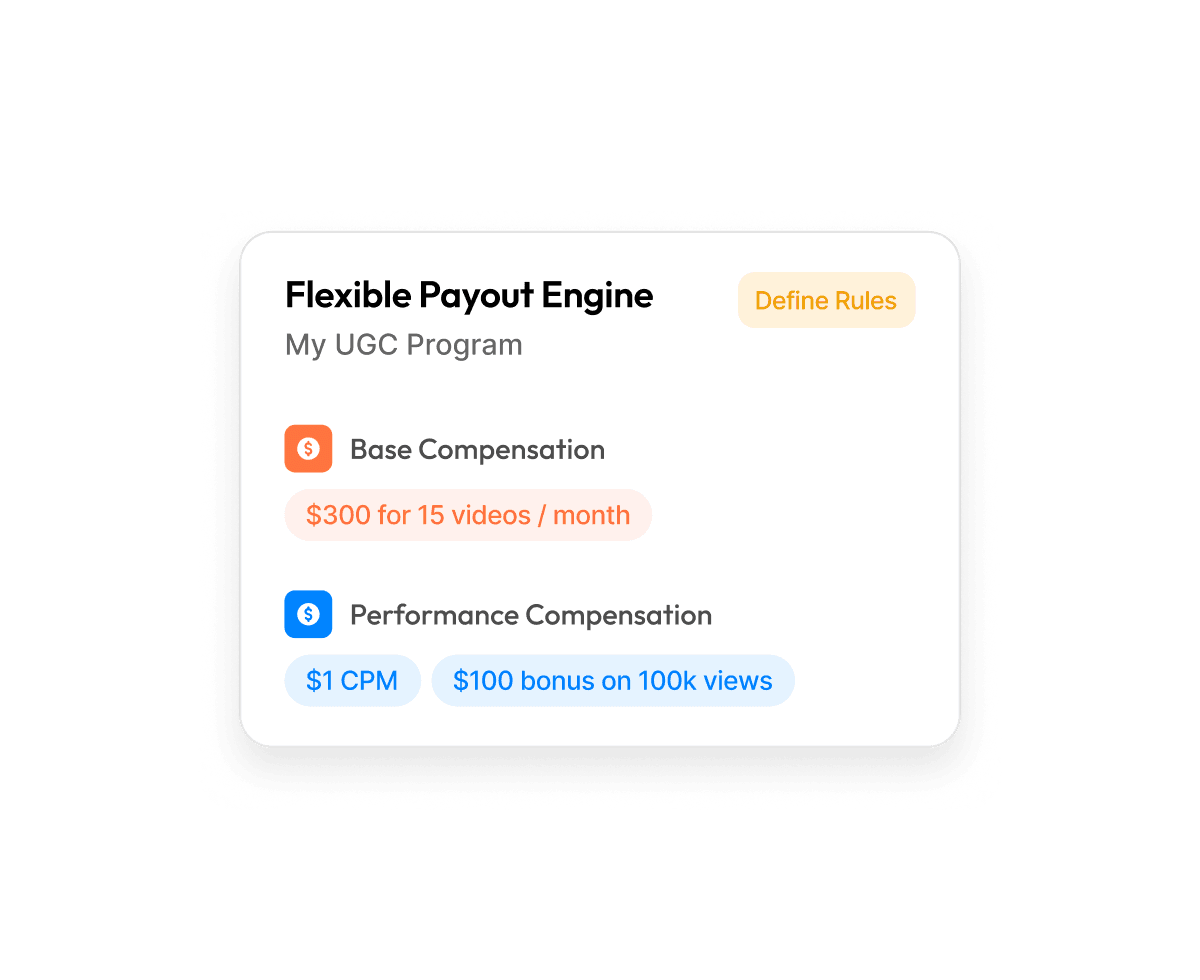
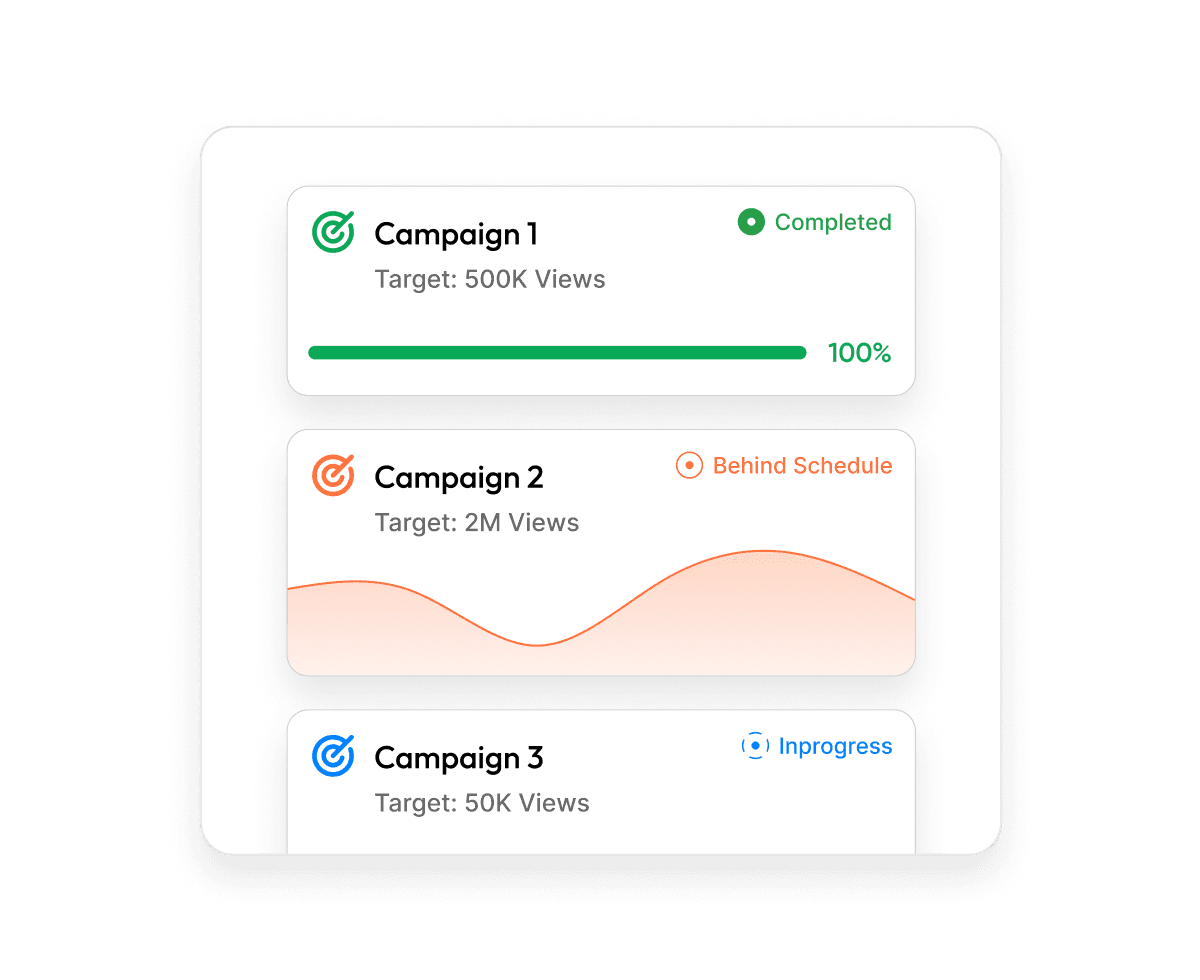
Inside viral.app, you create a campaign, choose tracked platforms, and define the payout structure: simple CPM, bonus tiers after 100,000 monthly views, base fees, or pure pay-for-views.
Once the rules are set, every creator payout calculation follows the same logic.
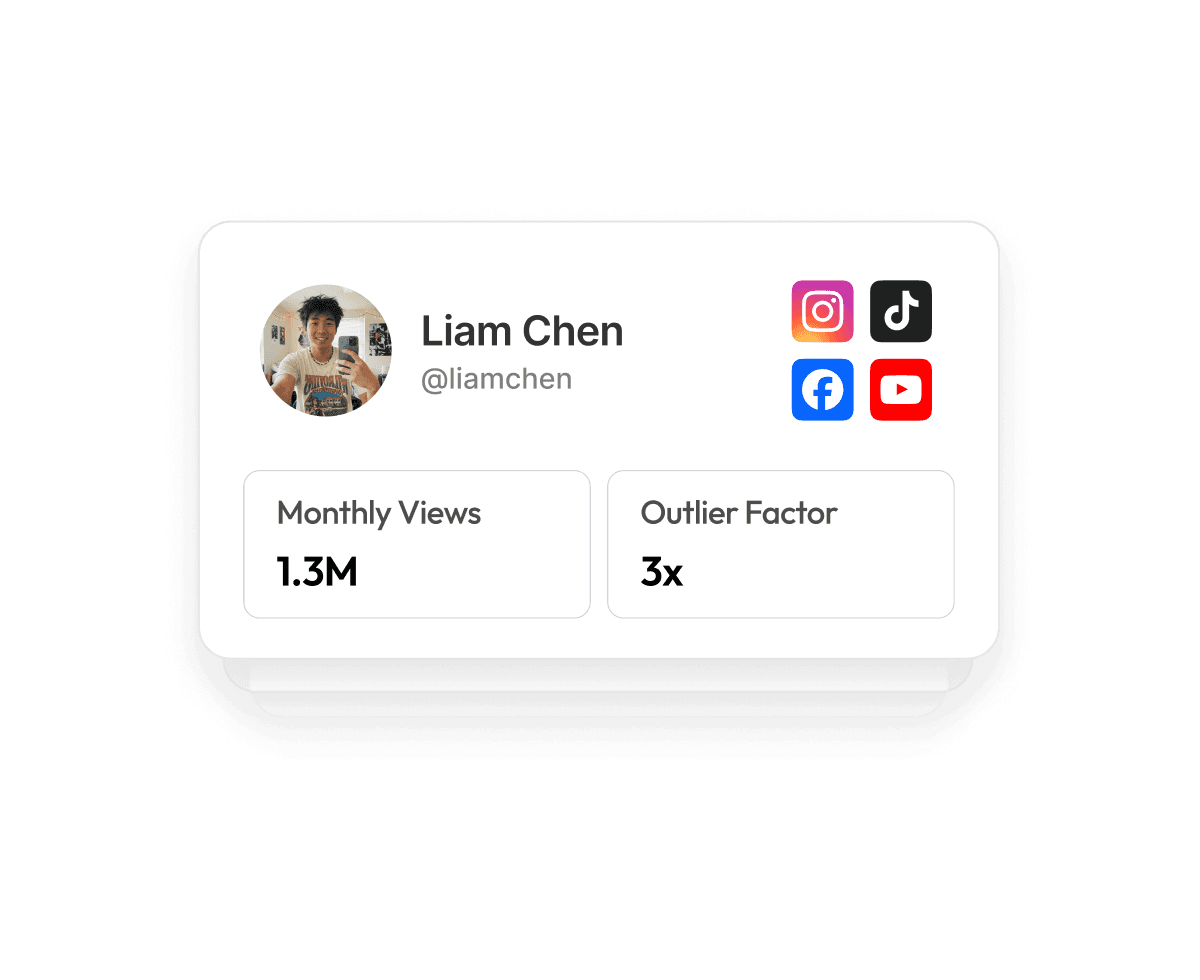
Adding a creator starts with a public profile URL, so viral.app can track TikTok, Instagram, YouTube, and Facebook accounts without asking creators to connect social accounts.
That removes a major onboarding objection, since asking for credentials can kill the relationship before the campaign starts.
Once a creator is added, you can invite them into a creator-facing view with performance data, current earnings, and campaign instructions.
That transparency cuts reporting emails, screenshots, and self-reported view reconciliation.
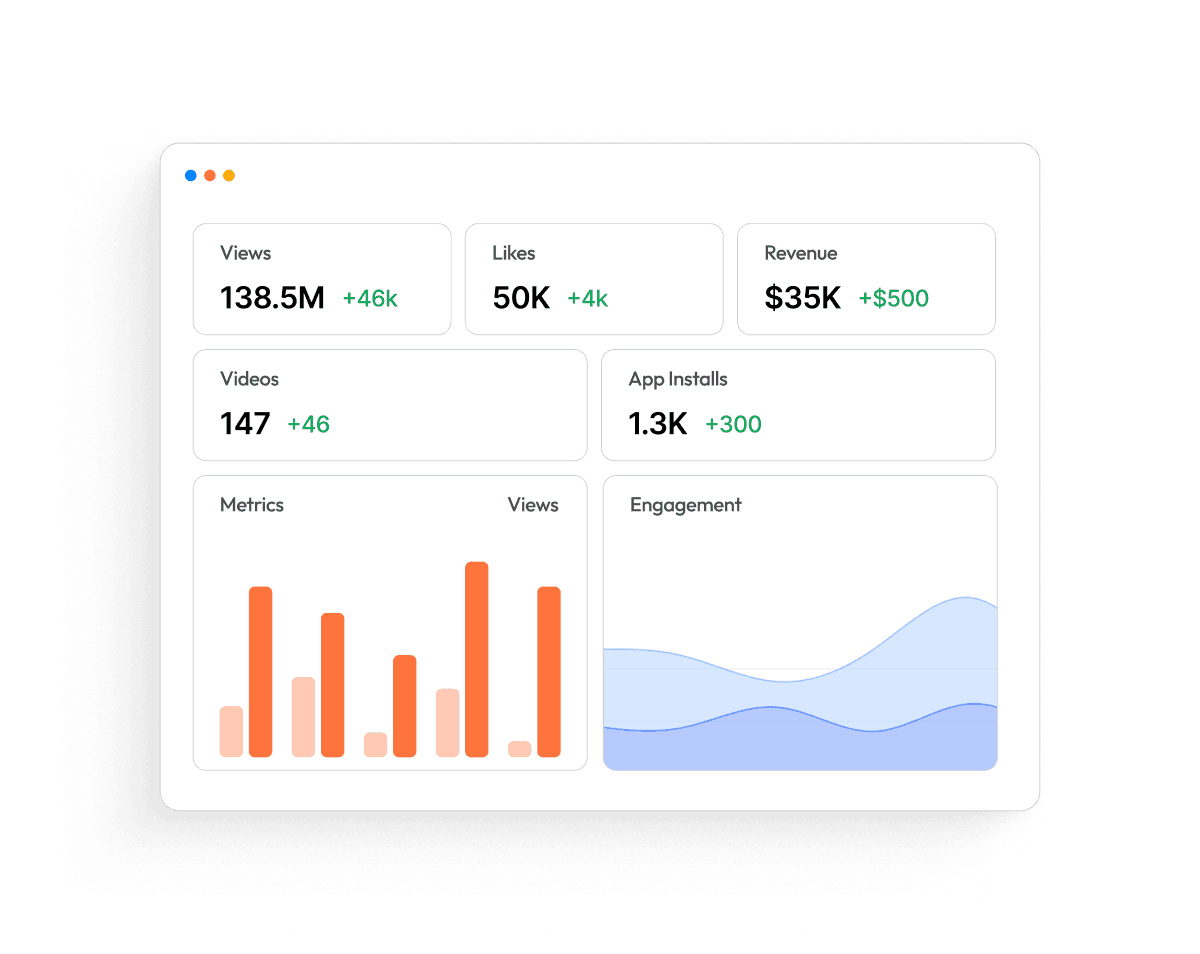
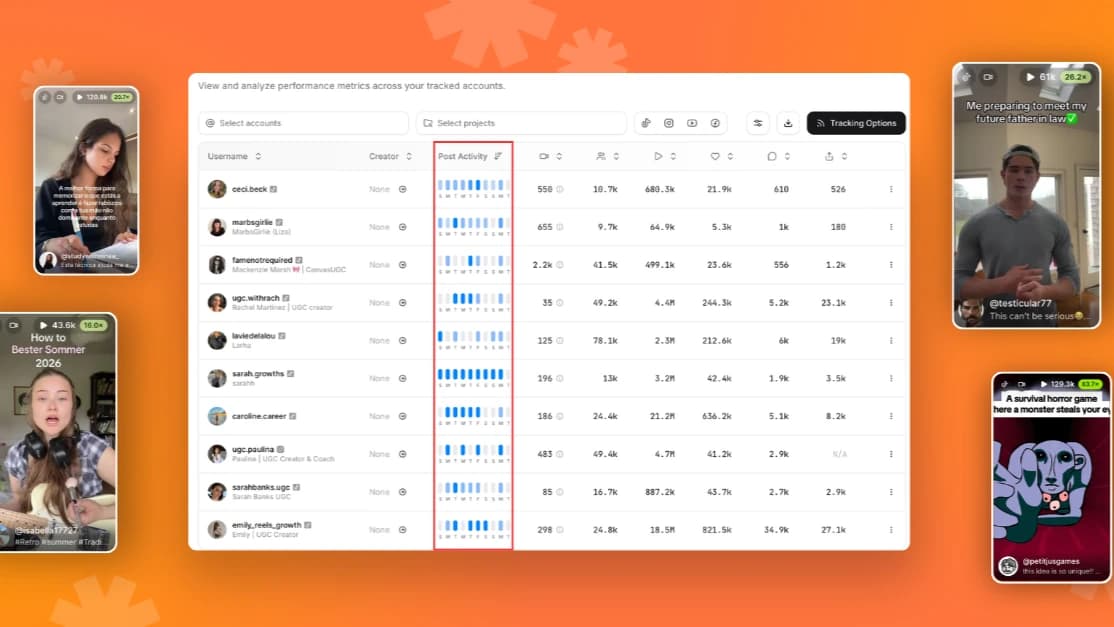
The analytics dashboard shows views, engagement, estimated CPM, creator activity, and revenue context across all platforms.
Filter by creator, platform, video tag, or time range to spot growth, climbing videos, and formats that deserve a follow-up brief.
At the end of each payment cycle, viral.app calculates every creator's earnings from tracked views and configured payout rules.
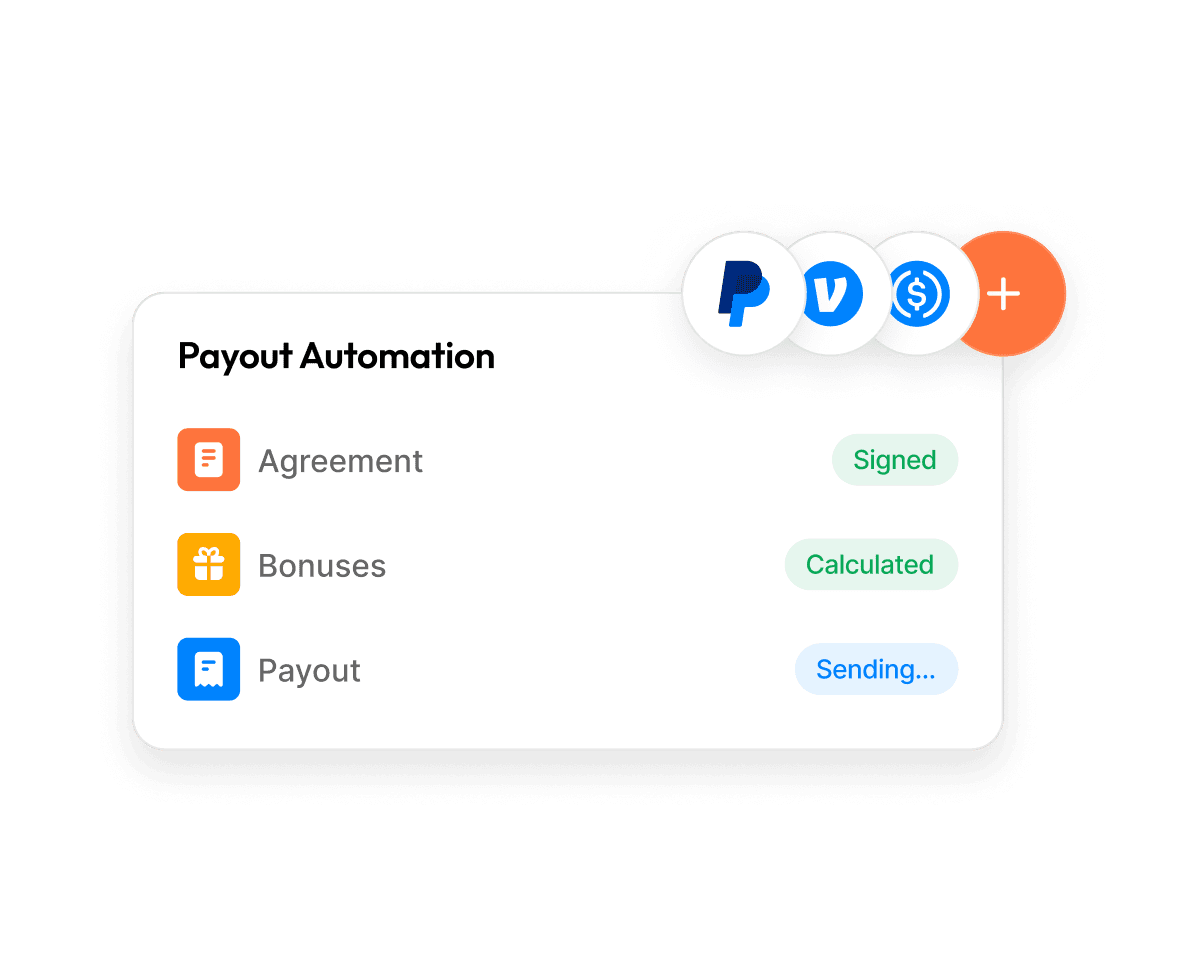
It generates invoices, supports tax documentation workflows, and handles global payouts across currencies, whether a creator earned $8 or $1,200.
Implementation
The best teams do not wait until the program is perfectly designed. They get the first creator cohort posting, then use performance data to make the program sharper.
Start with people who would naturally use and talk about the product. A language app might look for polyglots. A fitness tracker might look for amateur runners.
Look inside your existing user base and organic community first. People already posting about the product are usually easier to recruit than cold prospects.
Create the campaign, configure CPM rates or bonus tiers, write a practical brief, and add the creator accounts before the first posts go live.
Give creators visibility into their own performance and earnings so they do not need to ask for screenshots, updates, or manual reports.
Find the creators, hooks, formats, and product moments that beat the average. Update the brief around what actually worked.
Ask the best creators for referrals, then recruit from subreddits, Discord servers, Facebook groups, and niche spaces where the target user already spends time.
Pay creators, reward top performers, re-engage quiet creators, and replace inactive accounts with new recruits.
Platform capabilities
The Creator Hub is the command center for a high-volume creator program. Every creator appears with current view counts, earned revenue, posting frequency, and engagement data.
The point is not just nicer reporting. It is removing the spreadsheet as the operating system.
Competitor tracking is usually underestimated at first. Then teams rely on it heavily.
By adding competitors to a separate tracking panel, you can see which creators are posting about rival products, how those videos perform, and which formats are gaining momentum in your category.
Real-time alerts matter because timing matters. When a creator's video crosses 100,000 views, you have a narrow window to brief other creators on the same format while the algorithm is still distributing similar content.
You can also turn high-performing organic videos into Spark Ads or paid amplification without losing the creator attribution that made the post work in the first place.
"viral.app has become core infrastructure for running organic marketing. It has helped us scale to over a billion organic views."
 David ParkJenni AI Founder
The biggest mistake is overthinking the setup and delaying the start. The useful data only appears once creators are posting.
viral.app has a 7-day free trial with no credit card required. That is enough time to set up a campaign, add an initial creator cohort, and watch live performance data come through.
The Pro plan covers 10 active creators and 1,000 tracked videos. The Ultra plan covers 50 active creators and 5,000 tracked videos. For teams that want the result without building the function in-house, viral.app also offers full-service creator recruitment, campaign management, and content strategy.
Sub-$1 CPMs are not a theory. They are what well-run high-volume UGC programs can reach once the creator profile, payout model, and operating system are all working together.
High-volume user-generated content gives paid ad teams more trustworthy creative variations to test, scale, and reuse across Meta, TikTok, and similar platforms.

Daniel Shtabinsky
Growth Analyst
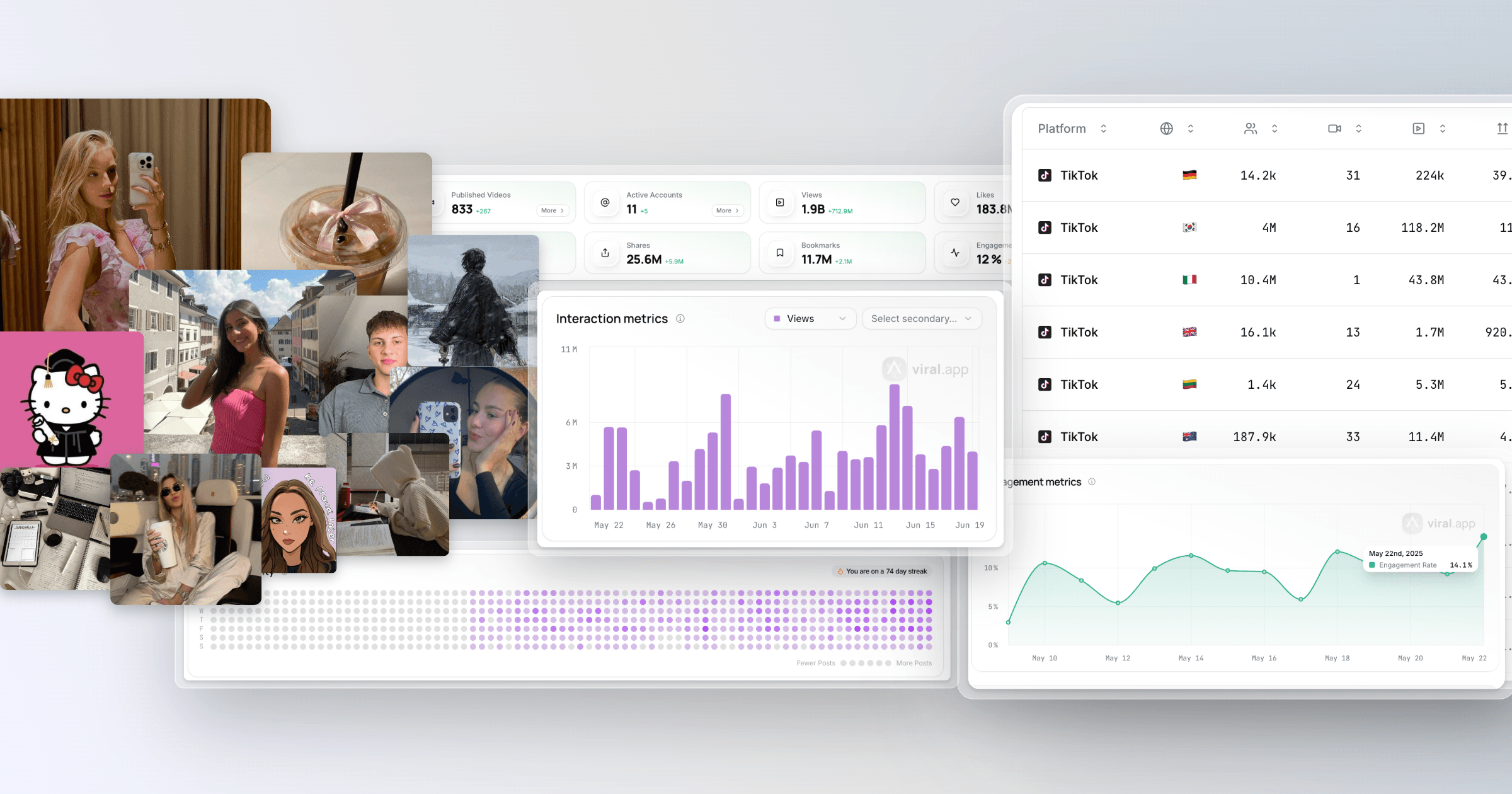
A practical playbook for finding creators, structuring deals, and scaling creator campaigns profitably

Mike Schneider
Co-Founder
Try without risk with our 7-day free trial.
Go based on data, not by luck.
Pay everyone on your own terms.
Eliminate hours of manual work.
Pay $0 today · Cancel anytime