


Measurement shift
Treat FYP views as fast creative feedback and TikTok search views as the durability signal. A strong UGC cluster should earn both early attention and repeat discovery from the same search intent.
Try without risk with our 7-day free trial.
Hire based on data, not by luck.
Pay everyone on your own terms.
Eliminate hours of manual work.
Pay $0 today · Cancel anytime
Try without risk with our 7-day free trial.
Hire based on data, not by luck.
Pay everyone on your own terms.
Eliminate hours of manual work.
Pay $0 today · Cancel anytime
Try without risk with our 7-day free trial.
Hire based on data, not by luck.
Pay everyone on your own terms.
Eliminate hours of manual work.
Pay $0 today · Cancel anytime
Pay $0 today · Cancel anytime
Book a demo and see how it would run for your brand.
Hire based on data, not by luck.
Pay everyone on your own terms.
Eliminate hours of manual work.
Pick a time · No commitment
Pick a time · No commitment
Try without risk with our 7-day free trial.
Hire based on data, not by luck.
Pay everyone on your own terms.
Eliminate hours of manual work.
Pay $0 today · Cancel anytime
Try without risk with our 7-day free trial.
Hire based on data, not by luck.
Pay everyone on your own terms.
Eliminate hours of manual work.
Pay $0 today · Cancel anytime
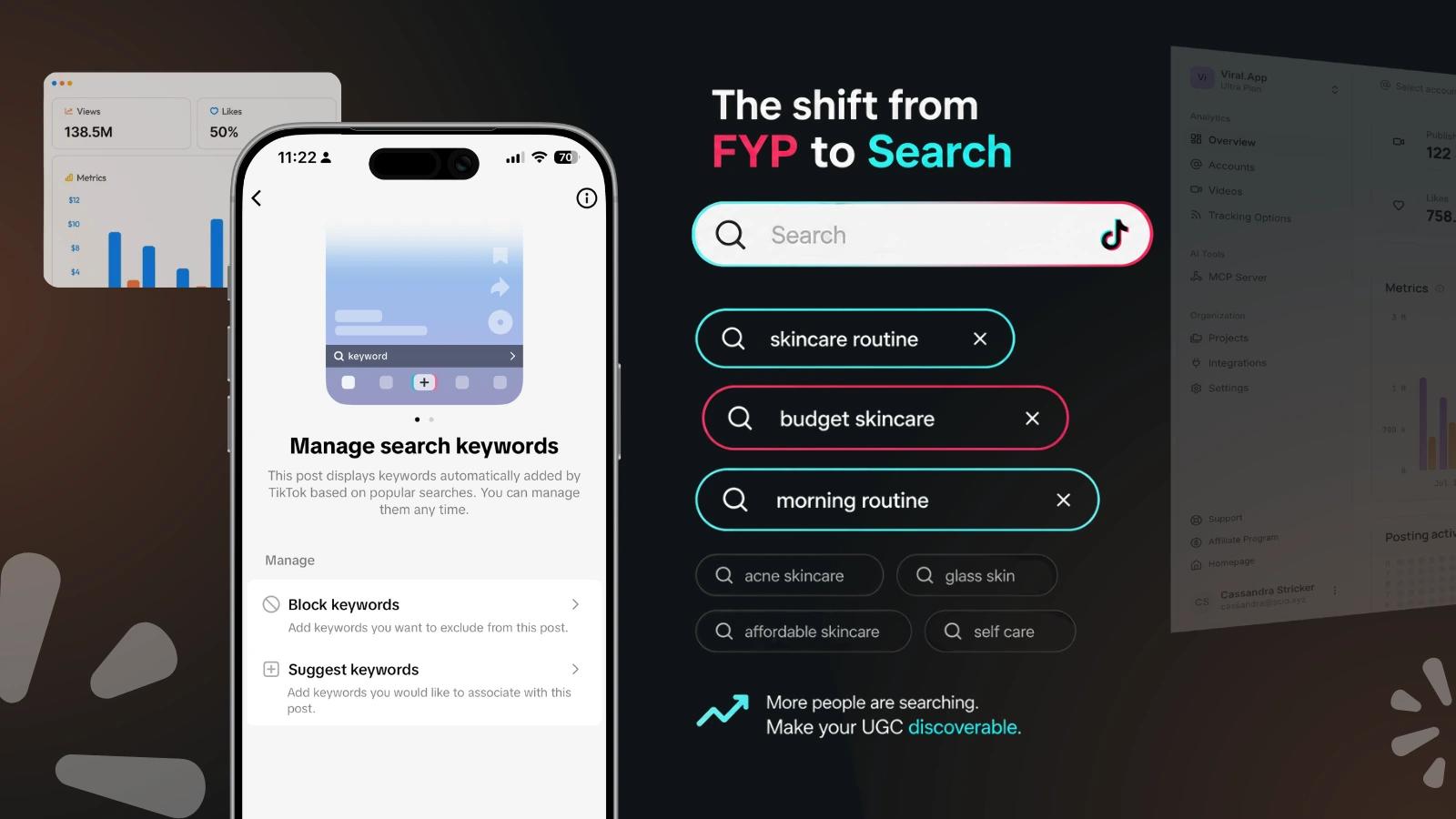
TikTok is evolving from a “FYP-first” feed to a search-driven discovery platform. The new feature allows creators to view keywords linked to their posts, understand their relevance, estimate additional views, suggest new keyword angles, and block irrelevant terms.
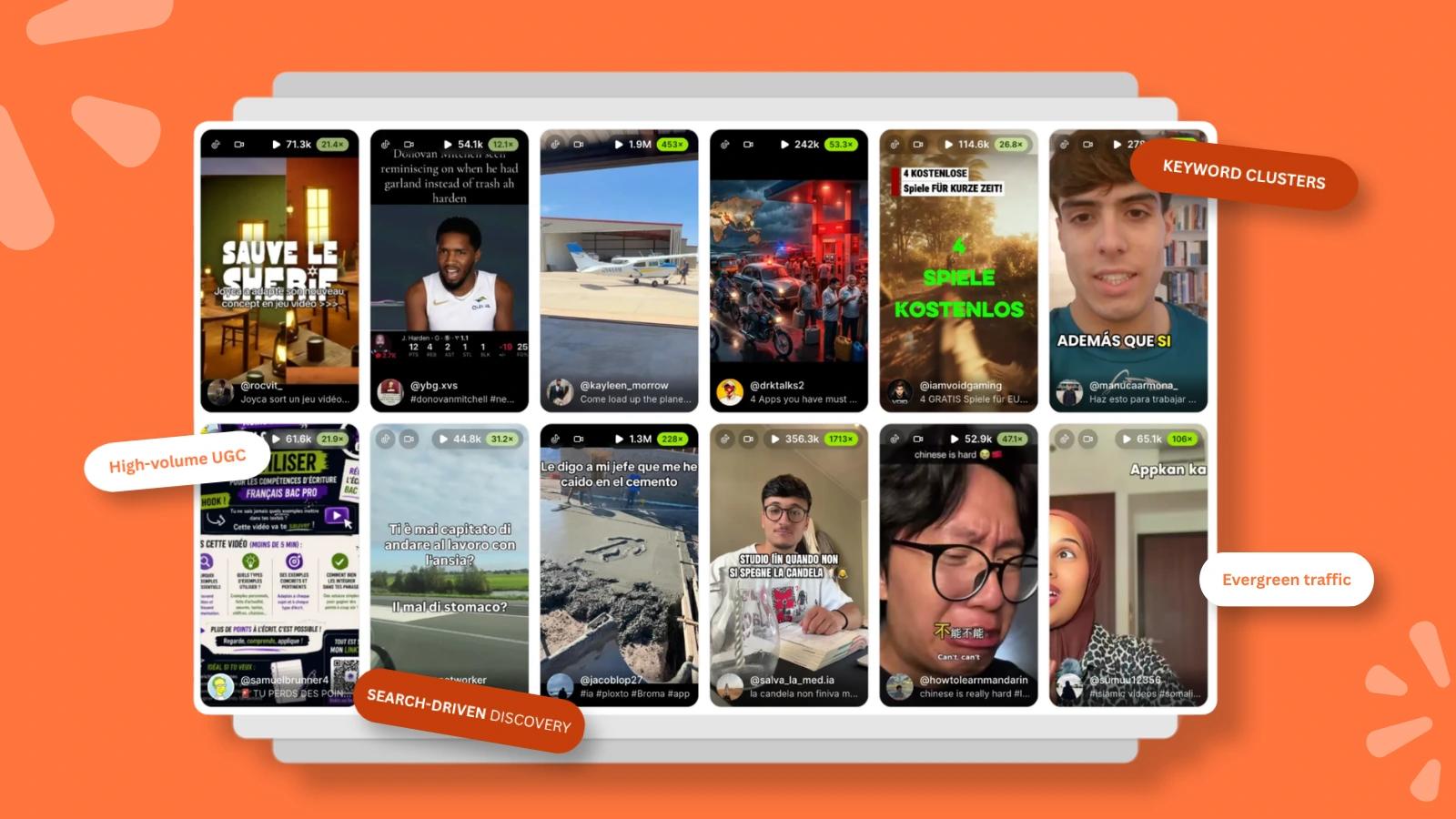
For brands managing high-volume UGC campaigns, success now depends on both virality and how content is indexed, matched, and surfaced through search.
Focusing only on viral FYP views can cause brands to miss long-term ROI. A multi-platform UGC and SEO strategy increases visibility over time. TikTok is becoming a core search and discovery channel where content remains effective for months or years.
Previously, TikTok performance was measured by whether a video appeared on the For You Page. Successful videos gained rapid traction, while others often struggled to find an audience. This emphasized timing, hooks, and momentum above all else.
But as TikTok leans further into search-driven discovery, videos are increasingly judged by intent. In other words, it is not only about whether someone scrolls past your video and stops, but it is also about what they are actively looking for, and which words they type into TikTok’s search bar. That changes the logic of distribution completely, because the video is no longer just competing for attention in a feed; it is also competing for relevance in search.
Search-keyword management on posts means you are now effectively tagging your UGC with intent signals. The platform is no longer just interpreting your content passively, it is giving creators and brands a way to shape how that content is categorized and surfaced. That makes search behavior a much more important part of the content strategy, especially for brands that rely on UGC at scale.
For example, a skincare routine that used to “just” perform well on FYP can now be aligned with searches like “easy morning skincare routine” or “beginner skincare routine under 5 minutes.”
That means the same piece of content can be designed not only for entertainment or scroll-stopping appeal, but also for discoverability around a specific problem, use case, or customer intent. In this context, TikTok is starting to behave less like a pure virality engine and more like a search engine for short-form content.
This shift is especially important for high-volume UGC. When brands are producing a large number of videos across creators, hooks, and concepts, the challenge is no longer just to make content that feels native.
It is to create content that can be categorized correctly, shown to the right audience, and kept out of the wrong one.
That creates a new layer of strategy:
For brands running UGC at scale, this is a major advantage if they adapt early. A single campaign can now be built around multiple search paths, with each creator contributing to a different intent bucket.
What’s really changing is distribution: TikTok is moving from a pure virality system toward a findability one. That does not mean virality is gone, it just means virality is now only one part of the equation, while relevance, search intent, and category fit are becoming just as important.
A video can be well-edited, authentic, and high-performing in the moment, but if it is not aligned with the right search terms, it may never reach the people who are actively looking for that exact topic. In other words, even a strong video can underperform if TikTok cannot clearly understand to which audience or search context it belongs.
TikTok’s new keyword controls make that distinction much more visible. The platform is signaling that content performance is not just about what gets watched, but also about what gets matched. It also makes keyword impact more visible by showing creators the additional views tied to search keywords, which adds a clearer performance layer to discovery.
For brands, this changes the way success should be defined. A good UGC video is no longer only one that gets attention fast, it is also one that stays discoverable for the right audience over time. That is why the best-performing content will increasingly be the content that combines strong creativity with clear search relevance.
Interruption vs. intent
FYP metrics rely on “interrupting” users while they scroll. This creates quick spikes in views that drop off immediately. Search intent captures users who are actively looking to solve a problem or buy a product.
Compounding traffic
A video that hits a slow but steady search volume for long-tail keywords will generate consistent, evergreen conversions for months or even years.
The new search engine
Over 40% of younger users now actively use platforms like TikTok and Instagram as search engines. That makes TikTok not just a creative channel, but a core discovery and search channel for Gen Z.
To adapt to this shift, brands need new video-level analytics alongside traditional FYP performance. TikTok’s Creator Search Insights now lets creators and brands track how posts perform in search results, including search impressions and search views.
In practice, watch these signals:
A UGC campaign should be judged on both feed performance and search performance, because a video can underperform in FYP terms but still win in evergreen search distribution. Over time, search-driven views can become a stable, compounding source of traffic that outlasts any single viral spike.
This change is significant, but it is not a perfect solution.
Most of the time, TikTok’s algorithm gets it right on its own. But manual keyword input gives creators and brands extra control to reach the right people and avoid the wrong ones.
Brands should stop treating TikTok UGC as only a creative deliverable and start treating it as a search-distribution system. If TikTok is now letting creators manage search keywords directly, that is a clear sign that discovery is no longer driven by feeds alone. The content still needs to be engaging, but it also needs to be placed in the right search context if brands want to reach the right audience.
Instead of briefing creators with one broad concept, define a few clear search-intent buckets around the product:
This gives each video a specific role in the wider discovery strategy.
For example, one creator might focus on “budget skincare,” another on “sensitive skin,” and another on “morning routine.” That way, the campaign creates multiple entry points in search instead of just a generic content pool.
Use Creator Search Insights to:
Over time, double down on keyword clusters that drive consistent search views and impressions, and refine or retire clusters that underperform. Treat your UGC library as a living SEO asset, not a one-off content batch.
To get both viral potential and long-term search value, UGC must be optimized for both the feed and the search bar. The feed side moves fast: The FYP Leak, our free newsletter, tracks which TikTok formats are rising every other week. The rest of this section covers the search side.
Build your UGC videos around specific questions rather than broad terms. Instead of targeting #skincare, target #dryskintips or “how to fix dry skin”. Long-tail terms are more specific, signal clearer intent, and face less competition.
Optimize for AI and platform algorithms by:
This triple signal helps TikTok’s algorithm understand what your video is about and match it to the right searches.
Check native analytics platforms regularly:
See what queries bring users to your content, then double down on those topics in future UGC briefs and creator iterations.
Judging UGC only by viral, short-lived FYP views means brands miss out on huge long-term ROI. A multi-platform UGC + SEO strategy builds compounding visibility over time.
TikTok’s move toward search-driven discovery means high-volume UGC should be built as a searchable content system, not just a batch of viral videos. Winning brands won’t just make more content, they’ll map more search intent, cover more keyword clusters, and manage relevance with the same rigor they already use for paid search and SEO.
Teams that adapt early will turn TikTok into a long-term discovery engine, where content continues to work for the brand long after upload, through search, not just the For You Page.
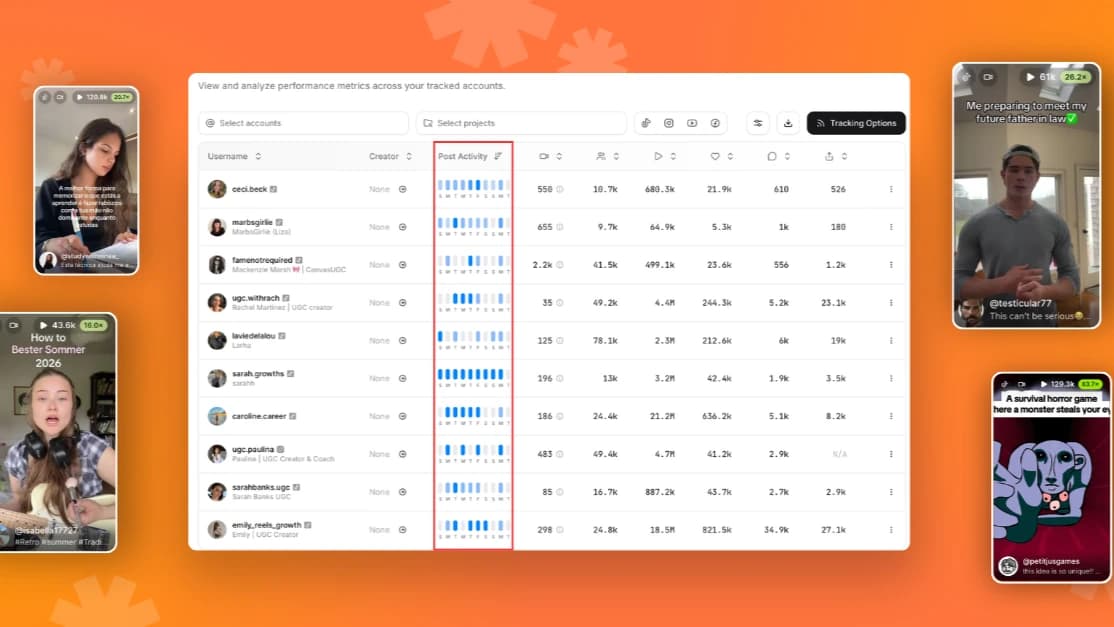
Running high-volume UGC with search-driven distribution means tracking hundreds of videos and seeing which topics and formats actually drive consistent traffic. That’s where viral.app comes in. viral.app is the operating system for UGC marketing. For search-driven UGC, it helps you:
For teams running high-volume UGC, viral.app becomes the infrastructure to track performance, organize content by intent, and double down on the search clusters that drive consistent traffic.
High-volume user-generated content gives paid ad teams more trustworthy creative variations to test, scale, and reuse across Meta, TikTok, and similar platforms.

Daniel Shtabinsky
Growth Analyst
Discover how Instagram Reels, YouTube Shorts, and others stack up against TikTok and find the right platform for your brand's growth.

Mike Schneider
Co-Founder
Try without risk with our 7-day free trial.
Hire based on data, not by luck.
Pay everyone on your own terms.
Eliminate hours of manual work.
Pay $0 today · Cancel anytime