Compare the best creative analytics tools for paid social and UGC teams, from AI creative tagging and fatigue detection to creator tracking, reporting, and payouts.
Written by
PublishedSeptember 10th, 2026
Creative analytics tools answer the question that campaign dashboards cannot: which hooks, formats, visuals, and messages are actually driving results. Instead of reporting that campaign A beat campaign B, they break performance down to the creative itself, so your next round of ads is built on evidence instead of taste.
That matters more in 2026 than it did even two years ago. Ad platforms have automated most of targeting and bidding, which leaves creative as the biggest lever a team still controls. Teams that win ship more creative variations, learn faster from them, and kill fatigued ads before they burn budget.
Choose viral.app for UGC and creator campaign analytics, Segwise for AI creative tagging and generation in paid acquisition, Atria for research-to-launch automation, Motion for AI creative reporting on Meta, TikTok, and YouTube, Foreplay for competitor research and swipe files, Superads for multi-platform creative reporting, CreativeX for enterprise creative quality, VidMob for enterprise creative data, and Alison.ai for element-level creative diagnosis.
How to choose the right creative analytics tool
Creative analytics is a broad label, and the tools in it solve different jobs. The fastest way to choose is to start from the decision you need the data to support:
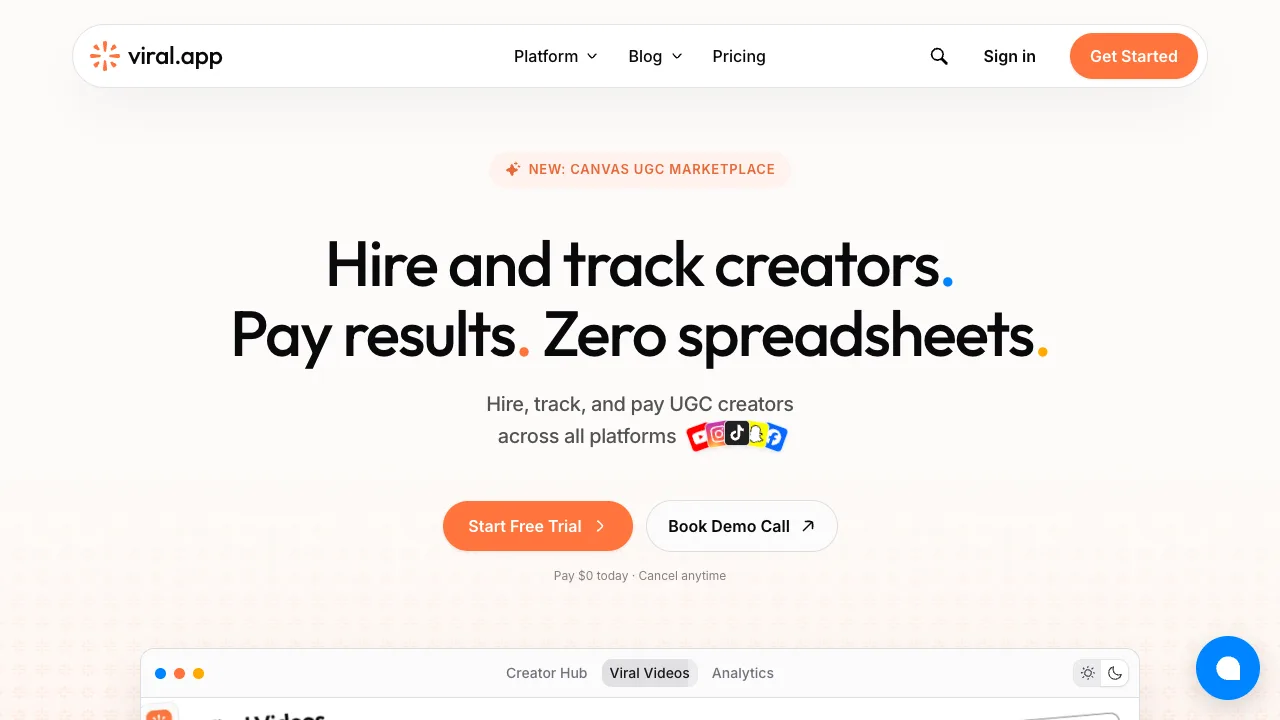
If your growth runs on creators and organic short-form content, viral.app's UGC analytics platform tracks creator posts across TikTok, Instagram, and YouTube and connects them to campaigns and payouts.
If you spend heavily on paid user acquisition and want to know which creative elements drive installs and ROAS, an AI tagging platform like Segwise or Motion fits best.
If you want research, creative generation, and bulk launching to Meta handled by one AI agent, with TikTok analysis alongside, Atria is built for that loop.
If your bottleneck is ideas and competitor context, a research and swipe-file tool like Foreplay wins.
If you are a lean team reporting across Meta, TikTok, LinkedIn, and Google Ads, Superads keeps reporting affordable.
If you need element-level diagnosis with pre-flight prediction across app-growth networks, Alison.ai covers channels most rivals skip.
If you are an enterprise standardizing creative quality across markets, CreativeX and VidMob operate at that scale.
Most teams end up pairing one organic-side tool with one paid-side tool, because the winning ads increasingly start as organic creator posts before media buyers scale them.
Creative analytics tools at a glance
Pricing was checked against each vendor's public site on September 10, 2026. Plans and limits change, so confirm the current package before buying.
The 9 best creative analytics tools in 2026
The ranking weights how much of the creative loop each tool closes, from performance insight to the next ad going live, and how quickly a growth team can get value without an enterprise onboarding. Enterprise governance platforms sit lower for that reason, not because they are weaker products.
1. viral.app — Best for UGC and creator campaign analytics
Best for: Brands, app teams, and agencies running high-volume creator programs whose winning ad creative starts as organic short-form content.
Most creative analytics tools start at the ad account. viral.app starts one step earlier, where the creative is actually born: creator posts on TikTok, Instagram Reels, and YouTube Shorts. It tracks every video your creators publish, shows which hooks, formats, and creators consistently perform, and connects that performance to campaigns, budgets, and payouts.
That makes it the system of record for teams running high-volume UGC programs. Instead of screenshotting view counts into spreadsheets, you paste profile URLs, and viral.app monitors every post with daily per-video performance data, AI video classification, and competitor tracking.
It also closes the loop that paid-side tools leave open: when an organic post proves itself, that is your next ad. Teams use the organic winners surfaced in viral.app as the input for Spark Ads and whitelisted campaigns, then pay creators automatically based on tracked performance.
Pricing snapshot: The public Pro plan starts at $79 per month when billed annually, and viral.app includes a 7-day free trial.
Pros
Tracks creative performance where it starts: organic creator posts across TikTok, Instagram, and YouTube.
Combines analytics with campaign management, creator hiring, and performance-based payouts in one workflow.
Surfaces winning organic creatives that are proven candidates for paid amplification.
Built-in Canvas UGC marketplace brings vetted creator applicants to you.
Cons
Focused on creator and short-form content programs, not paid ad account reporting.
Teams that only buy ads and never work with creators will get more from a paid-side tool below.
2. Segwise — Best for AI creative tagging and generation in paid acquisition
Best for: Mobile app, DTC, and agency teams running paid acquisition who want to know exactly which creative elements drive installs and ROAS, and generate new ads from those patterns.
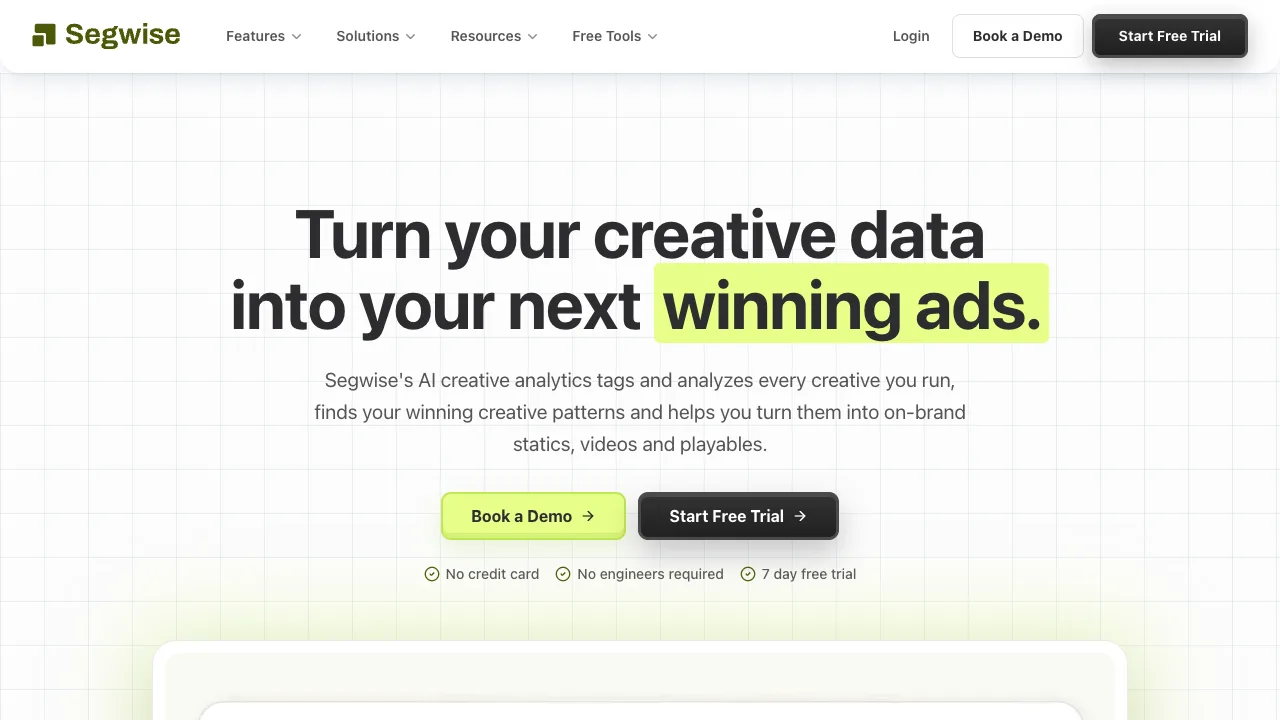
Segwise is an AI creative intelligence and generation platform for teams running paid acquisition across mobile apps, DTC brands, and performance marketing agencies. You plug in your ad networks and MMPs, and its multimodal AI automatically tags every element of a creative, including hooks, CTAs, characters, visual styles, emotions, audio, and on-screen text, then maps each tag to performance so you can see exactly which creative elements drive installs and ROAS.
On top of that data layer, an always-on AI creative strategist answers questions about your creative performance in plain language, flags creative fatigue before spend is wasted, and tracks how new creatives ramp. Segwise then closes the loop by generating net-new, data-backed creatives across image, video, and playable formats, built from your winning patterns and exportable in every ad network's aspect ratios.
Segwise is built for mobile games, DTC brands, subscription apps, and growth agencies, with customers like ecobee, PeopleFun, and Lion Studios. Every feature ships on every plan with unlimited seats, the platform is SOC 2 Type II certified, and its documented integrations cover 15+ ad networks and MMPs, from Meta, TikTok, and Google to AppLovin and Moloco, plus AppsFlyer, Adjust, Singular, and Kochava on the attribution side.
Pricing snapshot: Every plan starts with a 7-day free trial, no credit card required. Published pricing starts at $250 per month on the startup tier for teams under $50K in monthly ad spend and $499 per month for growth teams; see segwise.ai for current plans.
Pros
Multimodal AI tags video, audio, image, and text together, including interactive playable ads, which the company says it is the only platform to tag.
Creative-level data across 15+ ad networks and MMPs in one place, set up in minutes with no engineering.
Goes beyond analysis to generate and iterate on winning creatives, removing the production bottleneck.
Cons
Focused on paid ad creative intelligence, so teams running organic creator programs will use it alongside a dedicated UGC tool like viral.app.
Creative generation is most valuable once enough creative history is connected for the AI to learn winning patterns.
3. Atria — Best for agent-driven research, generation, and Meta launching
Best for: DTC brands and agencies that want competitor research, AI creative generation, and bulk ad launching driven by one AI agent.
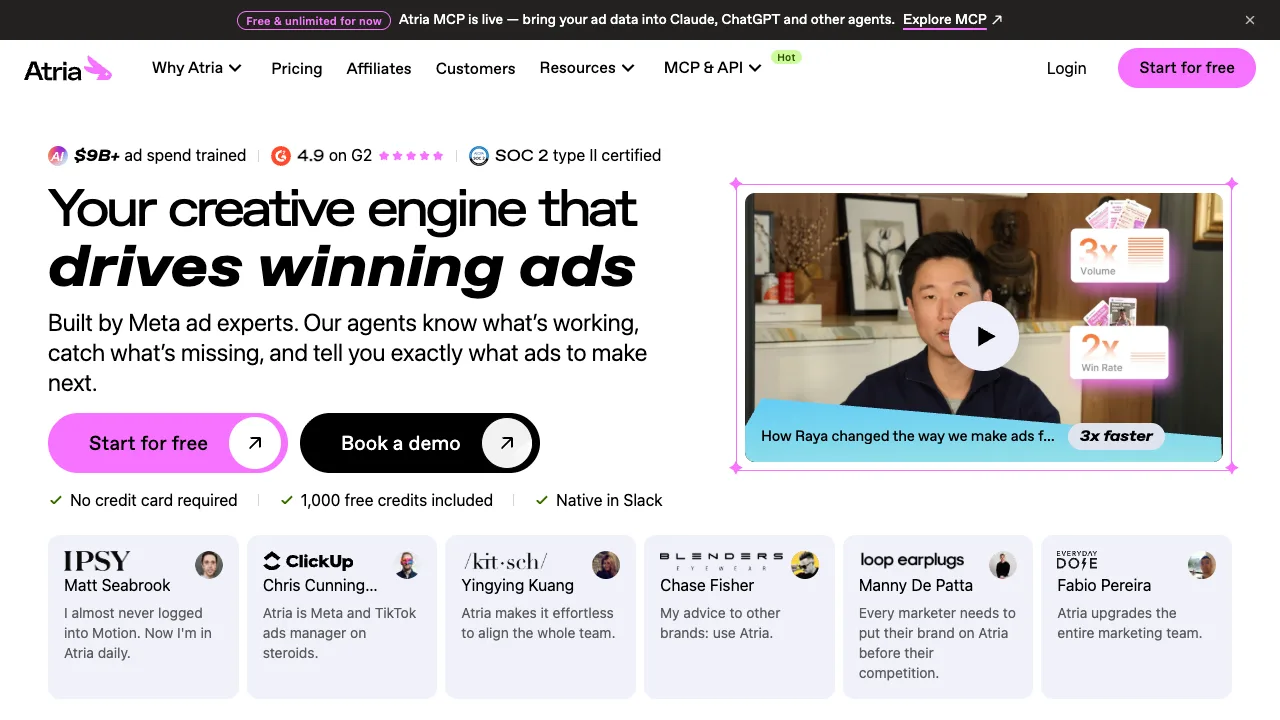
Rather than another dashboard, Atria positions itself as a creative engine. Its AI agent, Raya, is trained on what the company says is more than
$9B in real ad spend, and spans the whole loop: competitor intel and review mining for research,
AI-generated scripts, copy, and images grounded in performance data, one-click bulk launches to Meta
with auto-scaling of winners, and plain-English ad grading with fix recommendations.
The platform runs on AI credits metered by tier, analyzes Meta and TikTok accounts while bulk launching is Meta-only, and ships an MCP server plus REST API so you can use it inside Claude, ChatGPT, and Cursor. It openly positions itself as replacing the combination of Motion, Foreplay, and ChatGPT, and displays a 4.9 G2 rating on its homepage. It ranks ahead of the reporting-first tools below because it is the only product on this list that closes the whole loop, from research to live ads and auto-scaling, and because a team can start for free without a sales cycle.
Pricing snapshot: Core starts at $129 per month billed annually, Plus at $479, and Business at $959, with a free start including 1,000 credits and no credit card required.
Pros
Broadest scope in one product: research, generation, launching, and analysis.
Recommendations grounded in a large ad-spend training corpus, with proactive alerts.
MCP server and API let you drive it from AI assistants your team already uses.
Cons
Meta and TikTok only, which rules out B2B channels like LinkedIn and Google.
AI-credit metering and per-tier caps make effective cost harder to predict.
4. Motion — Best for AI creative reporting on Meta, TikTok, and YouTube
Best for: DTC brands and performance creative teams that want visual-first creative reports and an AI analyst embedded in Slack.
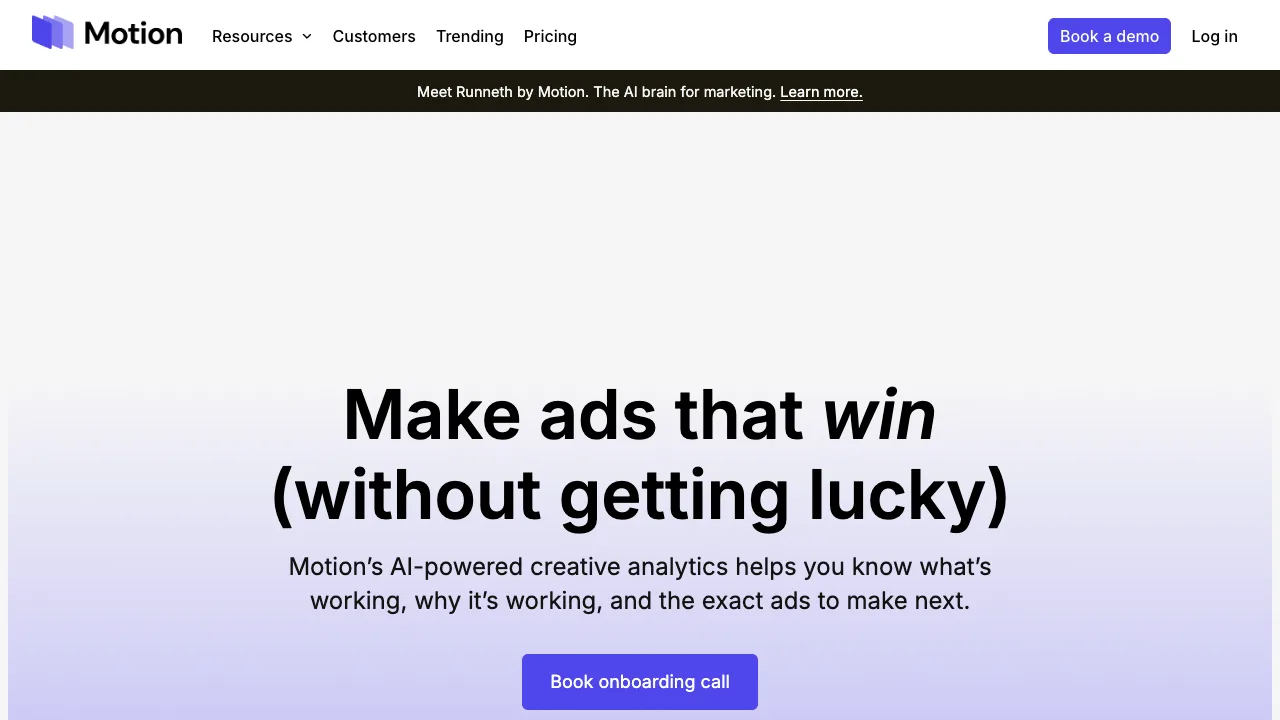
Motion is one of the best-known creative analytics platforms in DTC, built around visual reports that put creative thumbnails next to performance metrics for Meta, TikTok, YouTube, and LinkedIn ads. Its AI auto-tags every creative by asset type, format, hook, and angle, groups similar creatives together, and supports frame-by-frame video drop-off analysis with more than 200 metrics.
In 2026 Motion has leaned heavily into agents: an always-on AI analyst answers questions in Slack, ships weekly retros and briefs, runs pre-publish creative QA, and tracks competitor ads. The company says over 2,100 teams analyzing more than $14B in yearly media spend use the platform, with customers like HexClad, Jones Road Beauty, and Ridge on the homepage.
Pricing snapshot: Published plans start at $750 per month (Starter, up to $50k monthly ad spend) and $1,200 per month (Pro), both with unlimited seats and ad accounts. Sales is demo-led, though the site notes no credit card is required for a trial.
Pros
Deep creative-level analysis with AI tagging, comparative reports, and frame-by-frame video retention.
Unlimited seats and ad accounts on every plan, so no per-user math.
Slack-native AI agents plus Northbeam and GA4 integrations for attribution context.
Cons
Expensive entry point at $750 per month, with demo-gated onboarding.
Paid-social reporting only, with no organic or UGC content tracking.
5. Foreplay — Best for competitor research, swipe files, and briefs
Best for: Creative strategists and agencies that want ad research, competitor monitoring, and briefing in one workflow.
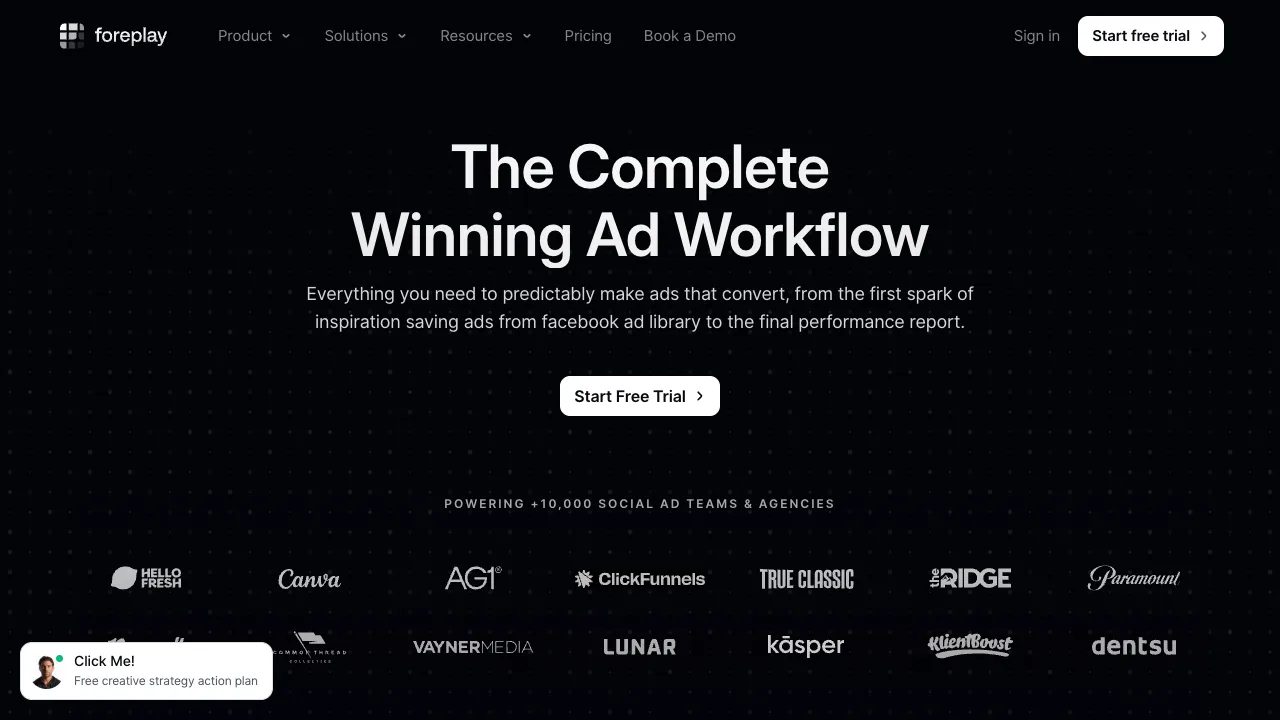
Foreplay approaches creative analytics from the research side. Its Swipe File saves and organizes ads from the ad libraries with auto-transcription, Discovery searches a claimed 100M+ ad database, and Spyder monitors competitor accounts around the clock with hook and creative-testing analysis. Briefs then turns saved inspiration into AI-assisted creative briefs with storyboards.
The analytics module, Lens, connects to your ad accounts to analyze creative tests, enrich ads with AI metadata like personas and hooks, and benchmark CPA, ROAS, CPC, and CPM against more than 30,000 other advertisers. Notably, Lens pricing is flat regardless of ad spend, which is rare in this category.
Pricing snapshot: Basic starts at $49 per month billed annually ($59 monthly), Workflow at $149 per month annually, and Agency at $389 per month annually, all with a 7-day free trial and a 14-day money-back guarantee.
Pros
Cheapest entry point in this list with a self-serve trial.
Strongest competitor research and swipe-file capability, with a large ad library and Chrome extension.
Flat-rate analytics that do not scale with ad spend, including advertiser benchmarks.
Cons
Lens analytics is Meta-centric, so first-party TikTok coverage is thinner than analytics-first rivals.
Its DNA is research and briefing; the analytics layer is newer and less deep than dedicated platforms.
6. Superads — Best for affordable multi-platform creative reporting
Best for: Lean in-house teams and B2B marketers who need creative-level reporting across Meta, TikTok, LinkedIn, and Google Ads.
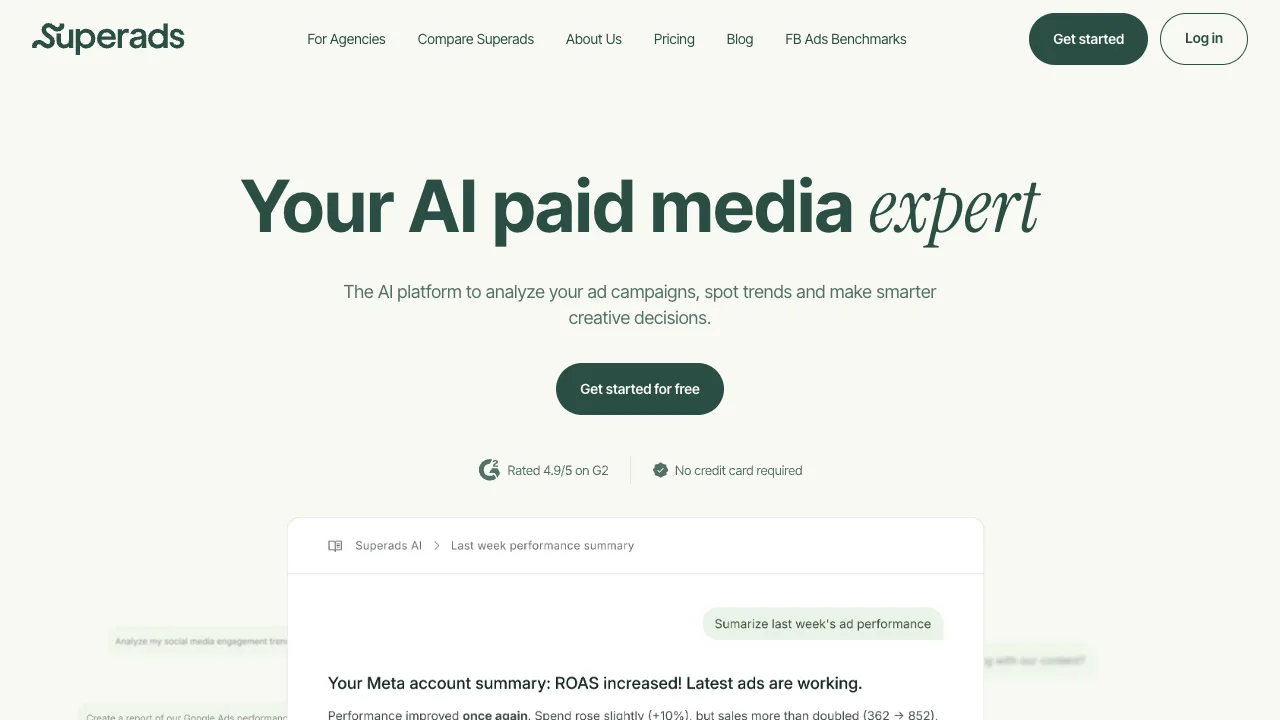
Superads was built by Superside, the creative-services company, as its internal insights tool before becoming a standalone product. It connects Meta, TikTok, LinkedIn, and Google Ads accounts, including Performance Max, into one creative-level view where thumbnails sit next to metrics, and grades each ad 0 to 100 with scores the company says are calibrated on more than $2.2B in tracked ad spend.
The workflow is reporting-first: unlimited reports and boards, AI tagging of creative elements, conversational AI analysis of your ad data, and automated reports pushed to Slack or email. It deliberately does not generate creatives, which keeps it simple. The LinkedIn and Google Ads coverage is a genuine differentiator for B2B and lead-gen teams that most tools in this category ignore.
Pricing snapshot: The Professional plan starts at $125 per month billed annually, covering up to $100k in monthly ad spend, with a 14-day free trial, no credit card required, and unlimited users.
Pros
The only tool in this list that pairs paid social with LinkedIn and Google Ads including Performance Max, the channels B2B and lead-gen teams need.
Low-friction commercial model with a real free trial, unlimited users, and no contracts.
Built on Superside's experience running creative for large brands.
Cons
Pricing scales mechanically with ad spend, adding $100 per month per additional $100k.
Reporting and analysis only: no creative generation and no organic or UGC tracking.
7. CreativeX — Best for enterprise creative quality standards
Best for: Global brand and media teams that need to standardize creative quality, consistency, and brand suitability across markets and agencies.
CreativeX approaches creative analytics from the governance side. Its core mechanism is the Creative Quality Score: automated checks of every asset against platform and brand rules, covering aspect ratios, video length, early branding, safe zones, text overlays, and custom guidelines. Checks run pre-flight before an ad launches and in-flight on live content, built on the company's finding that more than half of media budgets are spent on ads that are not fit for the platform they run on.
The platform ships four modules, covering creative quality, creative salience, creative lifecycle, and inclusive representation, and links pre-testing, creative, and media datasets so decisions can be tied to outcomes. Its case studies are the most enterprise-grade in this list: CreativeX cites a 74% ROAS lift at Nestlé and a 107% increase in brand lift at Bayer, with Heineken, PepsiCo, and Colgate-Palmolive among the logos on its homepage.
Pricing snapshot: CreativeX does not publish pricing. Buying runs through a demo and an enterprise sales process.
Pros
Codifies brand and platform rules into an auditable score, applied both before launch and on live ads.
Deep global CPG proof with quantified case-study lifts across markets and agencies.
Measures brand dimensions like salience and inclusive representation that pure ROAS tools ignore.
Cons
No public pricing and a demo-gated sales motion, which makes it impractical for small teams.
Oriented toward creative quality compliance rather than direct-response element mining.
8. VidMob — Best for enterprise creative data and scoring
Best for: Large brand, media, and agency teams that want creative scoring and analytics at enterprise scale, with exports into their own data stack.
VidMob calls itself the creative data company, and the numbers it publishes back the framing: more than 40 proprietary AI models and 3 trillion creative elements linked to performance data from over 300,000 ad accounts. Its Creative Scoring product validates assets against brand guidelines and platform best practices before a single impression is served, and feeds those scores into budget allocation.
Creative Analytics then connects creative elements to outcomes in-flight, broken down by audience, region, and platform, with predictive effectiveness scores. A Creative Data API and exports product lands the data in your own warehouse, and official platform partnerships span Google, Meta, TikTok, and retail media players like Amazon and Walmart. The company has raised more than $230M, with Adobe among its backers.
Pricing snapshot: VidMob does not publish pricing. Plans are scoped through a demo with its enterprise sales team.
Pros
The largest creative dataset and partnership footprint in this list, including retail media.
Covers pre-flight scoring, in-flight analytics, and warehouse-bound data exports in one platform.
Strong enterprise credibility across brand, media, and agency teams.
Cons
Opaque, demo-only pricing aimed at enterprises, which is heavy for lean growth teams.
Enterprise-first onboarding rather than self-serve setup.
9. Alison.ai — Best for element-level creative diagnosis with predictive scoring
Best for: Performance teams across ecommerce, apps, gaming, and finance that want element-level creative diagnosis, pre-flight prediction, and competitor benchmarks.
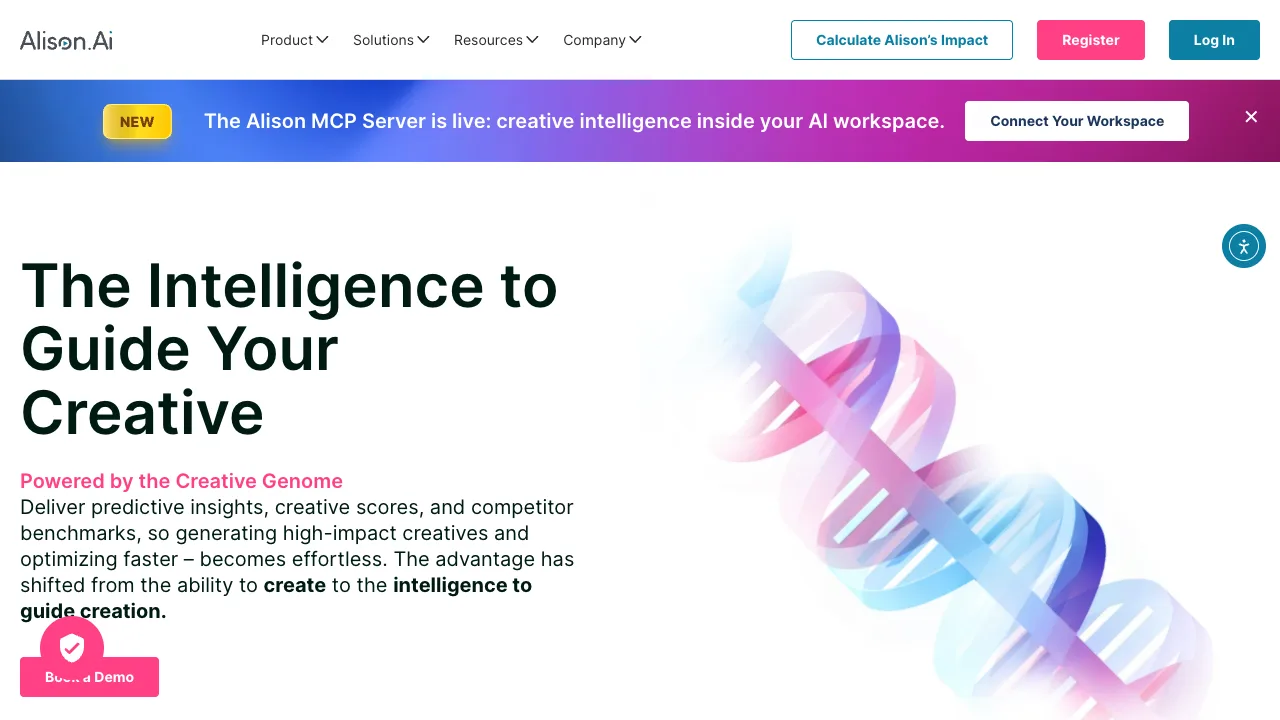
Alison.ai is built around what it calls the Creative Genome: a system that breaks every creative into core elements like hooks, pacing, visuals, messaging, and CTAs, then connects those elements to outcomes over time. Its Preflight Plus scoring blends two signals, what the platform rulebook says a creative should be and what your own account history says actually works, so new ads get a predicted score before spend is committed.
Coverage is unusually broad for the category, spanning brand social channels like Meta, TikTok, Snapchat, and LinkedIn alongside app-growth networks like Moloco, Unity, AppLovin, and Amazon Ads. The company recently shipped an MCP server that brings its creative intelligence into AI workspaces, and its homepage carries logos including P&G, HelloFresh, Zalando, and Henkel.
Pricing snapshot: Alison.ai publishes its tier structure (Essential, Pro+, and Enterprise, metered by connected platforms, seats, and analyses per quarter) but no dollar amounts. Pricing runs through sales.
Pros
Element-level analysis and pre-flight prediction in one product, grounded in your own account data.
Broad channel coverage that includes app-growth ad networks most rivals skip.
Enterprise logo wall across ecommerce, CPG, and finance.
Cons
No published prices, so budgeting requires a sales conversation.
Quota-based tiers with analyses per quarter and support hours suggest a service-mediated cadence rather than always-on self-serve analytics.
Which creative analytics tool should you choose?
Creative analytics only pays off when it changes what you make next. Pick the tool that matches where your creative decisions actually happen.
If your ads are made in-house and your spend lives on Meta and TikTok, start with a paid-side platform: Segwise if you want tagging plus generation in one loop, Atria if you want one AI agent to run research, generation, and Meta launching, Motion if you want best-in-class reporting with an AI analyst, or Superads if you need multi-platform coverage on a lean budget. Add Foreplay when competitor context and briefing become the bottleneck, and look at CreativeX, VidMob, or Alison.ai once creative governance and prediction across markets matter.
If your growth depends on creators, the highest-leverage move is instrumenting the organic side first, because that is where winning creative comes from. viral.app tracks every creator post across TikTok, Instagram, and YouTube, connects performance to campaigns and payouts, and hands your media buyers a stream of proven organic winners to scale. You can test it on a live campaign with a 7-day free trial.
A creative analytics tool breaks ad or content performance down to the creative level: which hooks, visuals, formats, and messages drive results. Most platforms tag creative elements automatically with AI and map each element to metrics like ROAS, installs, or engagement, so teams can decide what to make next based on evidence.
viral.app is the strongest option for UGC and creator-led programs because it tracks organic creator posts across TikTok, Instagram, and YouTube and connects performance to campaigns and payouts. Paid-side platforms like Segwise or Motion start at the ad account, so they complement rather than replace creator tracking.
Segwise is the strongest fit for mobile and app-focused paid acquisition because it tags creative elements across 15+ ad networks and MMPs and generates new ads from winning patterns. Atria is the pick for DTC teams that want one AI agent to run research, generation, and Meta launching, Motion leads for creative reporting on Meta, TikTok, and YouTube, and Superads is the value pick for multi-platform reporting that includes LinkedIn and Google Ads.
Teams that work with creators usually benefit from both. Organic performance shows which creative concepts resonate before media budget is committed, and paid-side tools then optimize how those concepts perform as ads. Pairing a creator tracking platform with a paid creative intelligence tool covers the full loop.