Compare 10 tools that support UGC programs through creator sourcing, content production, campaign management, performance tracking, social proof, and AI video creation.
Written by
PublishedAugust 20th, 2026
UGC marketing tools help brands source, manage, and scale user-generated content across TikTok, Instagram Reels, YouTube Shorts, and ecommerce product pages. A strong UGC platform gives brands a better way to work with vetted creators, organize creator content, handle usage rights, and track performance without relying on scattered spreadsheets and manual follow-ups.
As more brands invest in short-form video, the need for a structured workflow grows. The best UGC platforms help teams manage creator sourcing, content reviews, editing, rights, and reporting so they can scale faster without losing control of quality or consistency.
Below is a practical roundup of the most useful UGC marketing tools for brands that want to build a repeatable creator engine. The list includes tools for sourcing UGC creator talent, producing video assets, tracking performance, managing campaigns across short-form channels, and supporting distribution through email and CRM.
This roundup covers the full stack. If your main question is analytics depth — per-video and per-creator tracking across platforms — see our ranking of the best UGC analytics tools instead.
Quick answer
viral.app is the strongest all-round option for ongoing creator programs because it connects sourcing, campaign management, short-form analytics, and performance-based payouts. Influee and Trend focus on creator-made assets, Flowbox and Bazaarvoice on ecommerce social proof, and Creatify on AI-generated video.
How to choose the right UGC platform
Choosing the right UGC tool depends on your UGC strategy, budget, and how you plan to use UGC content. Some brands need a creator marketplace to hire a creator quickly, while others need a full marketing platform that connects brands with content creators, tracks performance, and automates creator payments.
Key factors to consider:
Goal: Do you want to scale UGC production, improve social proof, or organize existing assets?
Channel focus: Are you prioritizing TikTok and Instagram, or do you also need content for other major social media platforms?
Workflow: Do you need to manage content creators on the platform, handle briefs, oversee creator profiles, or collect UGC ads?
Volume: Are you running high-volume campaigns that require AI UGC or a large network of human creators?
Integration: Do you need a tool that fits into your broader marketing strategy and marketing channels, including email and CRM?
Top UGC marketing tools
The first nine tools directly support UGC production, activation, or operations. Brevo is included as adjacent distribution infrastructure rather than a dedicated UGC platform.
Pricing was checked against each vendor's public site on August 19, 2026. Plans, creator fees, usage rights, and campaign limits change, so confirm the current package before buying.
Detailed tool breakdown
Below is a deeper look at each platform: what it is best for, who it suits, and the main pros and cons.
1. viral.app
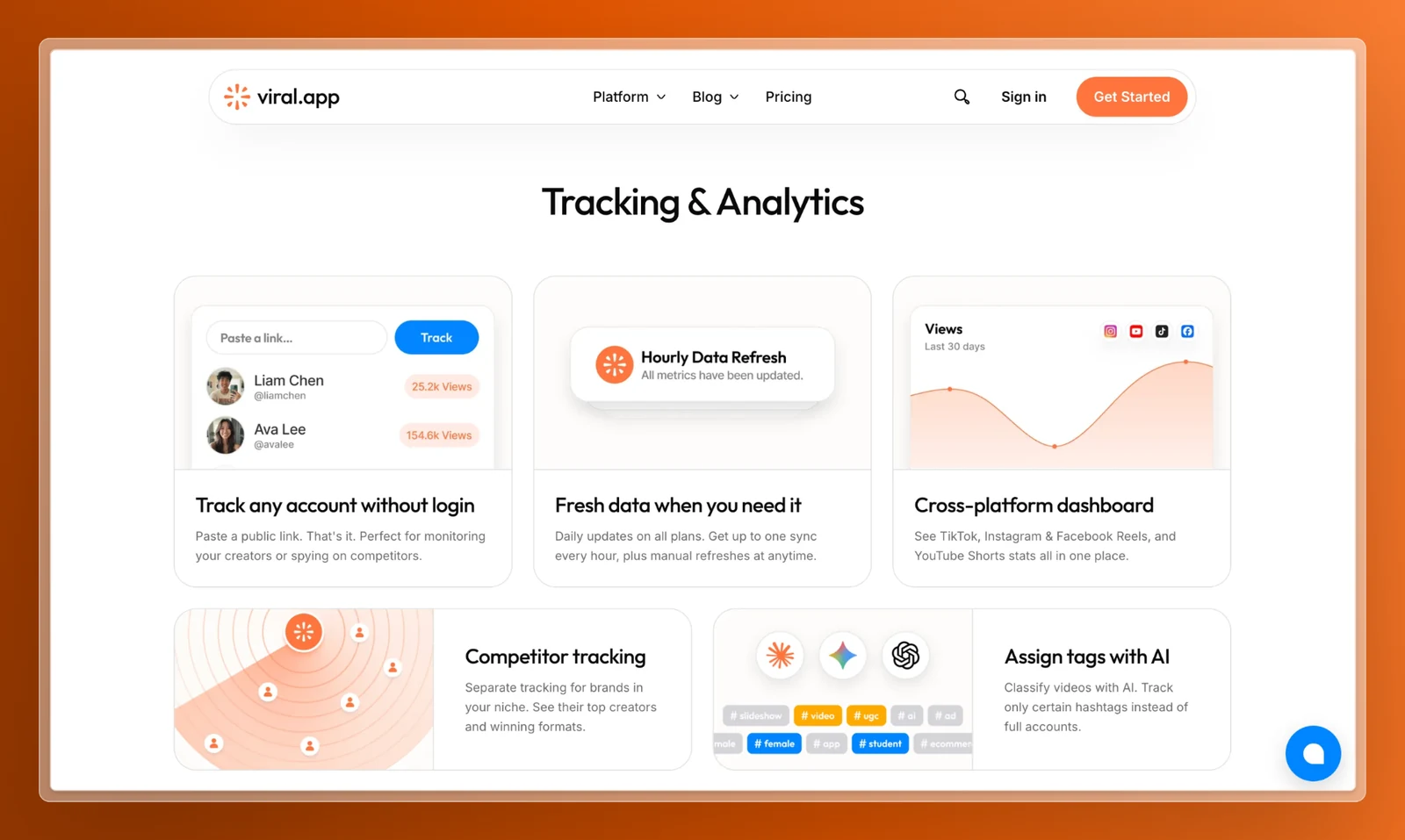
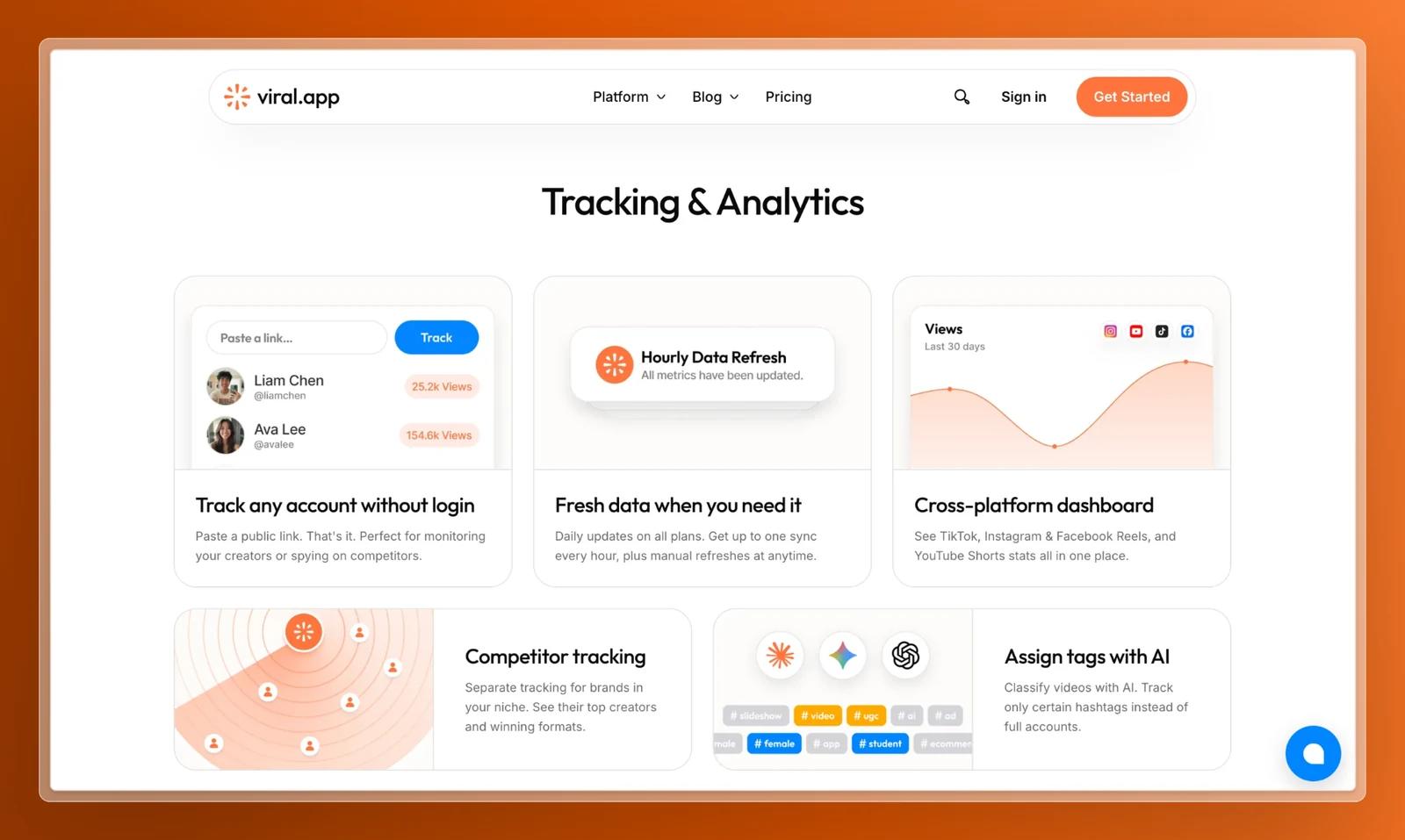
viral.app is best for teams that treat UGC as a performance channel and need one place to manage creators, campaigns, analytics, and payouts. It works especially well for brands that rely on TikTok, Reels, Shorts, and Snapchat Spotlight because it connects creator tracking with reporting and operational workflows.
As a marketing platform built for performance and Canvas UGC, viral.app tracks creator performance, automates creator payments, and shows teams which assets deserve more budget.
It suits brands that want to move past one-off campaigns and build a repeatable, high-volume UGC engine: test hooks, CTAs, and formats at scale, then feed the results back into sharper briefs.
"viral.app has become core infrastructure for running organic marketing. It has helped us scale to
over a billion organic views."
David ParkJenni AI Founder
Pros
Strong for scaling performance and Canvas UGC programs.
Useful for tracking performance across short-form platforms.
Combines analytics and campaign management in one system.
Good fit for teams handling multiple creators and ambassador accounts.
Lets users post job listings so creators can apply directly.
Enables in-app creator payouts.
Cons
Less useful if you only need simple creator sourcing.
Not the strongest fit for brands that only want to collect reviews or social proof.
Better suited to ongoing operations than one-off UGC projects.
2. Influee
Influee is a UGC creator platform that connects brands with a large network of vetted creators. It is a strong option for brands that want access to real creators and need a steady flow of UGC video assets. It is designed for creator collaboration, content production, and usage rights, and it fits teams that want fast turnaround with a structured process.
Influee connects brands with more than 140,000 content creators and helps teams produce content quickly for social media campaigns. It is one of the leading UGC options for brands that want to hire a creator on demand and scale content production without building a full in-house team.
Pros
Large creator network.
Good for UGC video production.
Includes usage rights and unlimited revisions after final approval.
Clear collaboration workflow.
Cons
Creator fees and the marketplace fee are separate from the platform subscription.
Not built primarily for analytics-heavy campaign operations.
Can become expensive as collaboration volume grows.
3. Flowbox
Flowbox is best for ecommerce brands that want to turn customer content into trust-building assets on product pages. It is useful when the goal is to collect, organize, and display authentic content that helps shoppers feel more confident before they buy.
Flowbox helps brands collect and display content from real customers, influencers, and UGC creators. It is less focused on performance-paid creator operations and more on helping brands use social proof across the customer journey. Its platform also supports media rights, product linking, influencer campaigns, creator payments, and analytics.
Pros
Strong for social proof.
Useful for product pages and shoppable galleries.
Good for ecommerce conversion support.
Helps repurpose customer content.
Cons
Custom pricing makes quick comparison harder.
Not ideal for teams that only need deep short-form performance tracking.
More suited to content activation than performance payout operations.
4. Trend
Trend is a practical choice for brands that want help sourcing creators and producing content that fits paid social. It is especially relevant for short-form campaigns where speed, creator fit, and ad-ready delivery matter.
Trend operates as a creator marketplace focused on creator matching and UGC ads. Brands create projects, review applicants, collaborate in-platform, and approve finished assets. Its packages include full licensing and distribution rights without a software subscription.
Pros
Helps with creator sourcing.
Useful for campaign coordination.
Supports short-form content production.
Good for paid-social workflows.
Cons
Costs grow with the amount of content purchased.
Less useful if you need advanced analytics.
More production-focused than operations-focused.
5. stylink
stylink UGC works well for brands looking for creator-led content without building a full internal production process. It is a good fit for teams that want a straightforward way to brief creators, review content, and manage usage rights.
stylink UGC connects brands with creators who apply to produce advertising videos. Its current public packages are Basic at €1,950 for five videos, Premium at €5,250 for ten videos, and Custom at a quoted price.
Pros
Simple creator collaboration.
Good for UGC sourcing and package-based production.
Supports approval and usage-rights workflows.
Useful for branded video campaigns.
Cons
Pricing starts with relatively large packages.
Not the deepest option for analytics.
Better for sourcing and production than for full-funnel campaign operations.
6. Bazaarvoice
Bazaarvoice is best for brands that want to build trust through reviews, ratings, and customer-generated content. It is especially useful for ecommerce teams that want to strengthen product pages with social proof and syndication.
Bazaarvoice helps brands collect and display feedback from real customers, which supports a broader UGC strategy focused on trust and conversion. It is less about UGC ads and more about long-term social proof on product pages and retail channels.
Pros
Strong review and rating infrastructure.
Good for ecommerce trust building.
Helps with content syndication.
Useful for product-page conversion.
Cons
Not built primarily for creator campaign management.
Less relevant for TikTok-style UGC production.
More focused on shopper content than video creation.
7. Creatify
Creatify is a good fit for teams that need quick short-form video output and want to experiment with creative variations. It works well when the goal is to produce UGC-style assets quickly without heavy manual editing.
Creatify is an AI UGC tool that generates video content for social media at scale. It is useful for teams that want to scale UGC production without relying only on human creators, especially when testing a high volume of ad variations.
Pros
Fast video creation.
Helpful for short-form testing.
Good for ad variation output.
Reduces editing time.
Cons
Less useful for creator relationship management.
May not feel as authentic as creator-made content.
Not designed for deeper campaign operations.
8. Boksi
Boksi is useful for brands that want a creator marketplace with campaign support. It fits teams that need to connect with content creators, send briefs, and collect content for paid and organic use.
Boksi connects brands with vetted creators and helps teams manage creator profiles, campaigns, content rights, and reporting. Its current pricing page says campaigns are supported in Germany and Finland, with tailored subscriptions and one-off campaigns rather than a simple public starting price.
Pros
Creator marketplace access.
Good for briefing and collaboration.
Supports content rights.
Useful for branded UGC campaigns.
Cons
Pricing requires direct contact.
Current campaign coverage is centered on Germany and Finland.
Better for sourcing than long-term cross-platform performance operations.
9. Archive
Archive is best when a brand already has plenty of content and needs a better way to organize and reuse it. It helps teams find useful assets, tag them properly, and repurpose them across campaigns.
Archive helps teams collect and organize UGC from TikTok, Instagram, and YouTube. It also supports social listening, creator search, usage rights, and campaign reporting, which helps if your brand already has a steady stream of social content. For a one-to-one breakdown, see viral.app vs. Archive.
Pros
Strong for content organization.
Helpful for discovering and repurposing existing UGC.
Good for asset management and usage-rights workflows.
Useful for identifying repeatable content patterns.
Cons
Dollar pricing is not public.
More focused on UGC capture and activation than creator payouts.
Can be more platform than brands starting from zero need.
10. Brevo
Brevo is not a pure UGC platform, but it can support the distribution side of a UGC strategy. It works well for brands that want to combine creator campaigns with email, SMS, and CRM workflows that help drive repeat visits and conversions.
Brevo can sit alongside your UGC efforts, helping you nurture leads and customers who engage with UGC ads and creator content. It is a good fit for brands that want to integrate UGC into a broader marketing strategy across multiple marketing channels.
Pros
Strong email and CRM functionality.
Useful for campaign follow-up.
Free entry point.
Helpful for broader lifecycle marketing.
Cons
Not built for UGC creation or creator management.
No native focus on UGC video workflows.
Better as a supporting tool than a core UGC platform.
Conclusion
There is no single best UGC tool for every brand. The right platform depends on your goals, budget, and how you plan to use UGC across social platforms, paid ads, and product pages.
Pick a tool that fits how your team already works and can grow with your program. Teams running ongoing creator programs should also decide early whether sourcing, campaign management, analytics, and payouts need to stay connected.
If that is the workflow you need, start a 7-day free trial. Setup takes a few minutes, and you can cancel anytime.
FAQ
A UGC marketing tool helps brands source, manage, organize, or publish user-generated content such as videos, testimonials, reviews, and creator posts.
The best UGC platforms are built around creator workflows, usage rights, and content performance. Adjacent marketing tools may support distribution or automation without managing the creator workflow itself.
viral.app is the strongest option for scaling ongoing creator workflows because it combines creator sourcing, campaign management, analytics, and payouts in one platform.
Influee and Creatify are both strong options for UGC video production, depending on whether you want creator-made content or AI-assisted output. Trend is another strong option for packaged creator-made assets.
Flowbox and Bazaarvoice are especially useful for ecommerce teams that want to add social proof and customer content to product pages.
Yes. Several tools support TikTok workflows, especially viral.app, Influee, Trend, Flowbox, Archive, and Creatify. Check whether you need production, analytics, rights, or payouts because platform support means different things in each product.
Brands should look for creator access, usage rights, editing support, analytics, workflow management, and the ability to scale across multiple channels.
Influee, Trend, stylink, and Boksi are strong options for creator collaboration, briefs, and paid brand work. The best fit depends on the creator's country and the types of campaigns currently available.
Most creator platforms use creator matching and creator profiles to help teams identify suitable creators based on niche, style, location, and past work. viral.app also lets brands publish job listings and review direct applications.
Tools such as Creatify can generate content quickly, but many brands still prefer human creators when authenticity, lived experience, and brand fit matter. AI is often most useful for rapid variation and early testing.